
Updated On:
Kerala had always been on our ‘hit list,’ often showing itself whenever we planned a domestic trip.
While we had heard amazing experiences our friends enjoyed in this coastal state, coincidentally, our social media feed had been dominated by Kerala tourist places, as if asking why we haven’t visited it yet.
So, this year, when we reopened our discussions on the next domestic destination, Kerala was already leading the race. Before we knew it, we were ready for Kerala travel experiences.
- Why visit Kerala this year?
- To wander the layered history of Fort Kochi
- To see Kathakali — Kerala's most extraordinary art form
- To walk through tea estates, even if you've done them before
- To relish the uniquely delicious Keralite 'Sadya.'
- To lose yourself in the beauty of Kerala's backwaters
- To experience living in Kerala's houseboats at Alleppey.
- To celebrate Onam — if your dates align
- To relax your muscles at an Ayurvedic Spa in Kerala
- To spot wildlife in Thekkady — or let it find you on the road
- To feel empowered at Jatayu Earth Center
- To experience Varkala — Kerala's most happening beach
- When is the best time to visit Kerala?
- How many days do you actually need in Kerala?
- Here Are The Answers To Any Question You Might Have!
Why visit Kerala this year?
Often referred to as ‘God’s own country,’ Kerala is hands-down one of the most beautiful places in India, with its lush green cover and tranquil, unbelievable experiences.
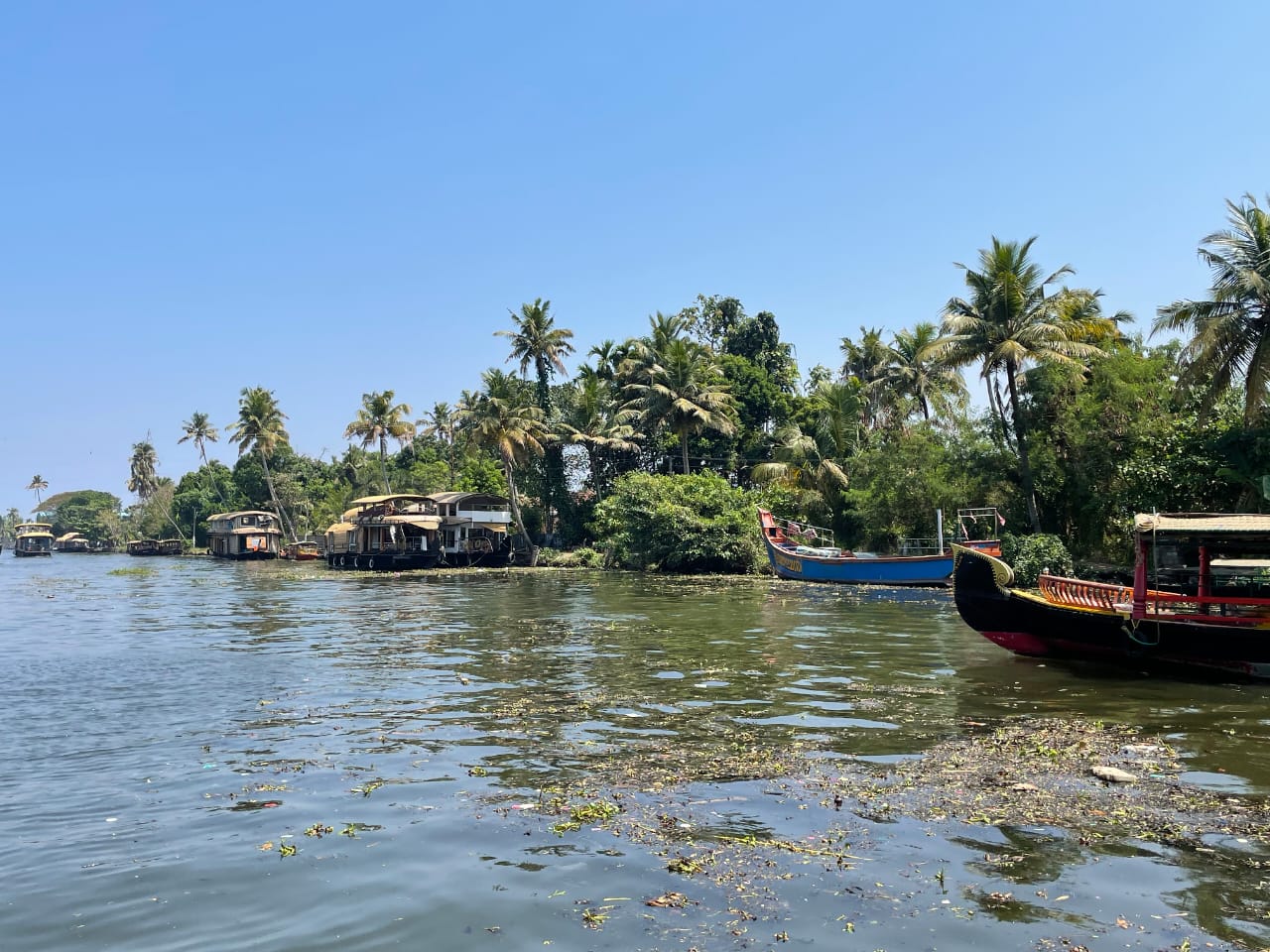
Traditional houseboats anchored on the shores of a fishing lake in Kerala's Backwaters, India.A confluence of experiences, you can easily cover everything in a 10-day trip, starting from Kochi and ending at Trivandrum.
However, what makes it special and a must-visit is the diversity of experiences it offers; Kerala is a geographically diverse paradise.
You can enjoy:
- Mountains and tea gardens in Munnar,
City life in Kochiand Trivandrum,- Beaches in Kovalam, Varkala, and Marari,
- Wildlife in Thekkady Wildlife Sanctuary,
- Trekking in Wayanad, and
- Backwaters in Alleppey and Monero Island.
Where else can you experience such a rich natural contrast in one state?
While it is soothing to the eye with its lush greenery, it also has many other unique attractions that make for a perfect destination. Here are 9 glorious reasons you need to plan a trip to Kerala.
To wander the layered history of Fort Kochi
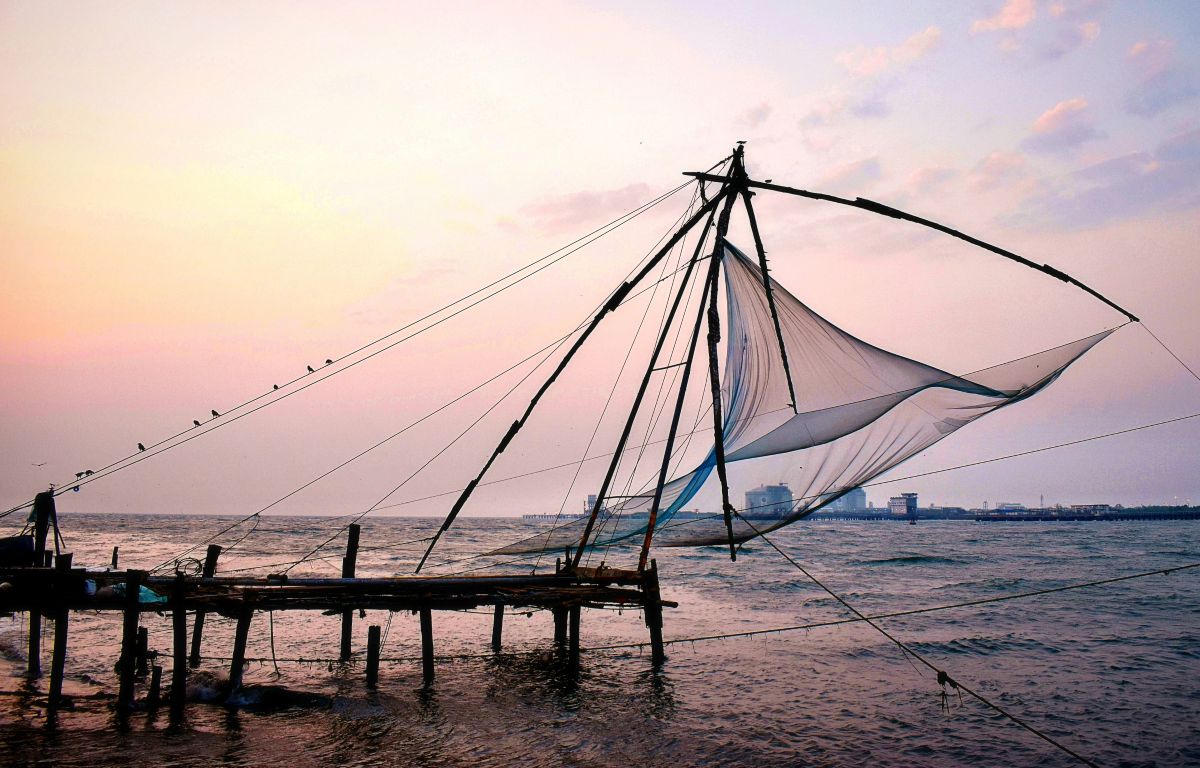
Kochi is where most Kerala trips begin, and even if you’re itching to get to the backwaters, don’t rush through it.
Fort Kochi, the old part of the city, is unlike anything else in Kerala.
Three colonial powers — Portuguese, Dutch, British — stayed here for years, leaving their imprint.
You can walk its narrow streets to see Portuguese churches standing next to Dutch-era warehouses, with colonial buildings and spice shops, and art galleries scattered around.
The Chinese fishing nets at the waterfront are the postcard image of Kochi, and so is the boulevard around the Fort.
We only scratched the surface of Fort Kochi, but even a brief wander through Princess Street gave us enough to want to come back with more time.
The cafés in restored heritage buildings, the old Jewish quarter of Mattancherry, and the colorful facades in the Jew Streets of Kochi have a slow, layered quality that feels nothing like that of any other city.
If you want to go deeper, I’ve covered the best places to explore in Kochi in this dedicated Kochi guide.
Practical note: Fort Kochi is best explored on foot. Keep a half-day minimum, a full day if history interests you.
To see Kathakali — Kerala’s most extraordinary art form
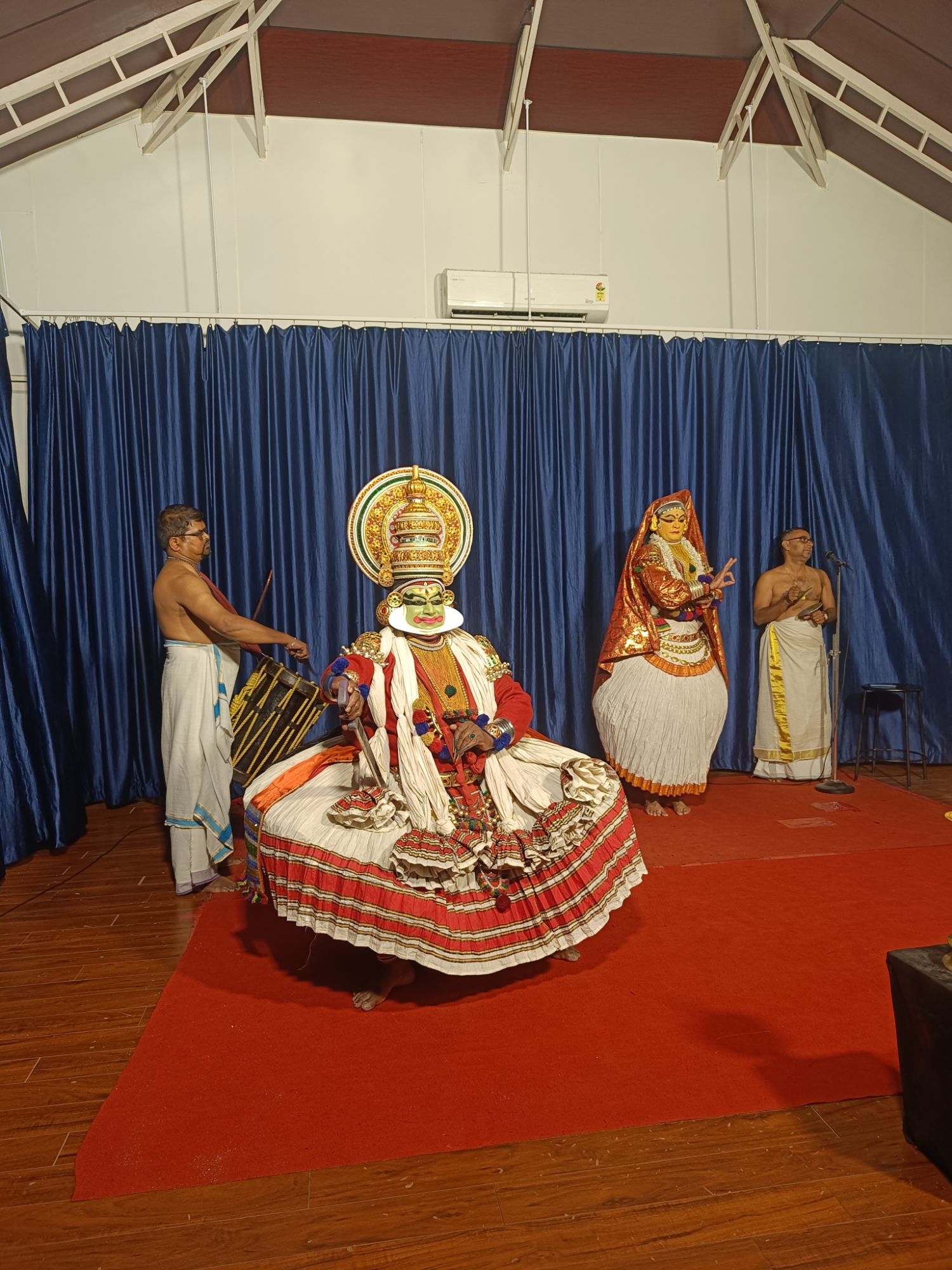
No matter how packed your Kerala itinerary is, make room for a Kathakali performance.
It is one of those experiences that is genuinely hard to describe and impossible to forget.
Kathakali is a classical dance-theatre form native to Kerala.
The performers wear elaborate costumes with towering headdresses, and their faces are painted in vivid colours — green, red, and black — using natural pigments applied over hours.
The performances usually enact stories from the Hindu epics, where the sheer physical intensity of the performance, with the controlled expressions, the drumbeat that fills the room, and the slow, dramatic build, keeps you captivated.
The Kerala Kathakali Centre in Kochi hosts shows most evenings, and you can choose to watch the makeup and costume process up close.
Insider tip: The makeup preparation can take 2–3 hours before a performance. Many centres open the backstage process to visitors about an hour before the show. Do not miss this — watching a performer transform is as absorbing as the performance itself.
To walk through tea estates, even if you’ve done them before
Munnar is Kerala’s most photographed destination for a reason.
The tea gardens around Munnar are some of the oldest in India, and the landscape they create — endless green against the blue-grey of the Western Ghats — is unlike anything else in the country.
The rolling hills covered in neat rows of tea bushes, the cool air, and the mist that hangs over the valleys in the early morning are genuinely worth the visit.
We did not spend much time in Munnar’s tea gardens on this trip, because we had just come from Ella in Sri Lanka, walking through tea plantations at Lipton’s Seat.
After that, the idea of doing another tea estate visit felt like repeating ourselves rather than experiencing something new.
But if you haven’t experienced wandering around tea estates before, Munnar should absolutely be on your Kerala itinerary.
To relish the uniquely delicious Keralite ‘Sadya.’
I am sure I cannot convince you to plan a Kerala holiday if I don’t allure you with the food.

Vegetarian Sadya we ate while cruising through the backwaters in Munroe IslandSo, if you have ever fancied South Indian food with Rasam, Sambhar, and rice, tasting Sadya should be enough reason for you to visit Kerala.
Sadya is a traditional dish of Kerala, usually prepared and served on festivals and special occasions.
Served on a banana leaf, it is scrumptious, colorful, and a burst of flavors, with its constituents of rice, lentils, chutneys, sweets, and curries.
While you can have a taste in eateries and hotels in the cities, it is also served as a lunch in every excursion you book around the backwaters in Alleppey.
Depending on where you are ordering a Sadya, in a hotel or during excursions, the items can vary. You can also order non-veg Sadya containing prawns or fish.
It felt very authentic to eat out of a banana leaf, where I could taste different kinds of chutneys and tantalizing flavors in one meal. The nearby lip-smacking sounds already gave me a message that it was going to be a delicious meal.
However, since Sambar is made of lentils, it could be a little heavier on the stomach. So, avoid overeating if you have a long day ahead.
Related Read: Essential items you must carry on a Kerala trip
Sure, you can taste versions of this Sadya in other Indian states like Mumbai or Bangalore, but it will nowhere taste as good as having it on a Kerala trip.
To lose yourself in the beauty of Kerala’s backwaters

One reason to visit Kerala is its serene backwaters — a quintessential Kerala holiday experience.
Spending some tranquil moments under the canopy of coconut trees while gliding through backwaters is an unforgettable experience in its totality.
(If you can go for a morning ride through the backwater, there’s nothing like that!)
Sailing on calm water, surrounded by tall grasses and coconut trees on both sides, it feels nothing short of meditative, where calmness washes over you, extinguishing any kind of stress or anxiety you might have.
Backwaters in Kerala start from Alleppey, which is why it is one of the most visited places in the state.
Unfortunately, Alleppey is super crowded during peak tourist months, though totally worth it if.
For a more authentic experience, you can either plan your trip during off-season months or opt for a boat ride through backwaters in other places, like Monroe Island ( Here is a detailed guide on Monroe Island backwaters).
To experience living in Kerala’s houseboats at Alleppey.
Backwaters make houseboats another widely desired experience in Kerala.
As the name suggests, houseboats are wooden houses that have all the necessities required for a comfortable stay.

A traditional houseboat is anchored on the shores of a fishing lake in Kerala's Backwaters, India.These houseboats offer immersive experiences during the day, cruising along the backwaters, giving you a glimpse of paddy fields and village life.
In the night, they are docked at a quiet spot where you can relax and have a flavorful dinner. You can either book a day trip or an overnight stay.
Depending on how much you are willing to spend, it can be as luxurious or modest as you can think of.
Sure, Kerala is not only the place where you can stay in houseboats (Srinagar offers houseboat stays too!), but it is a very different experience due to the difference in landscape and surrounding beauty.
In the early morning and dusk, when the tourist crowd has returned to the dock, you could feel the stillness of the Kerala backwaters, occasionally interrupted by birds’ voices and the sound of ripples caused by any nearby boat or ferry.
If you’re lucky, you can also catch the sunrise playing hide & seek behind the coconut trees. At such moments, you would understand why Kerala is called God’s own country!
Should you book an overnight stay in Kerala houseboats?
Staying in houseboats could be a unique experience, especially if you have lived all your life cramped in apartments in metro cities.
However, if you are short on time and not inclined to spend the night in still waters, you can opt for a day trip on a houseboat cruise to experience the area. (We chose to do the latter!)
To celebrate Onam — if your dates align
If your Kerala trip happens to fall in August or September, you may land right in the middle of Onam: Kerala’s most beloved festival.
Onam is a 10-day harvest festival celebrated across the state, deeply embedded in the cultural identity of Kerala.
During Onam, homes are decorated with intricate floral carpets called Pookalam, traditional Sadya feasts are served in every household, and the famous Vallamkali — the snake boat races — are held on the backwaters.
The snake boat races at Punnamada Lake in Alleppey draw thousands of spectators every year.
We visited in February, so Onam was not on our calendar — but it is now firmly on our “reason to go back” list.
Planning note: Onam falls between August and September, which overlaps with the tail end of monsoon season. The weather will be wetter, but the cultural richness more than compensates. Accommodation books up fast during Onam week — plan at least 2–3 months in advance.
To relax your muscles at an Ayurvedic Spa in Kerala
With travelling to work and sitting in a single position with eyes glued to the screen for hours at a stretch, massages have become my favorite indulgences.
So when we visited Kerala, there was no chance I would have missed an authentic Ayurvedic massage.
Deeply immersed in the ancient Indian tradition of massages for well-being and health, centers in Kerala are known for authentic treatments and oil massages that help treat ailments and rejuvenate your body.
We booked a massage in Varkala on our last day of the trip, before we reintroduced ourselves to the mayhem of corporate metro life.
We opted for Abhyangam, a full-body massage with aromatic oil, followed by a steam bath and warm water bath.
While massages might not be a novelty for you, I am sure you would love the feeling of aromatic oils relaxing your muscles and nerves while the warm shower refreshes you to face the day head-on.
However, I would suggest not repeating our mistake, i.e., booking a massage through the hotel. I felt it was not only expensive, but I also felt it lacked authenticity.
If you have any contacts, it is best to look for authentic Ayurvedic centers around the city for the best experiences. It can cost anywhere from $11 to $60, depending on the place and massage you use.
I wrote about the full experience — what to expect, what we got wrong, and whether booking through a hotel is worth it — in my Ayurvedic massage in Kerala guide
To spot wildlife in Thekkady — or let it find you on the road
Kerala has more than 20 wildlife sanctuaries and national parks, and Periyar Tiger Reserve in Thekkady is the most accessible and most visited of them.
You can do boat rides on Periyar Lake, guided bamboo rafting through the reserve, and jungle treks with forest department guides.
We had recently experienced wildlife in Yala National Park, Sri Lanka, and Kruger National Park in South Africa, which were as fresh as new, which is why we skipped Thekkady.
However, we did get a chance to see a small herd of elephants crossing the road while travelling to our next destination, which was truly an unexpected moment of the whole trip.
If wildlife is a specific priority for your trip, build Thekkady in as a 1–2 night stop between Munnar and Alleppey
To feel empowered at Jatayu Earth Center
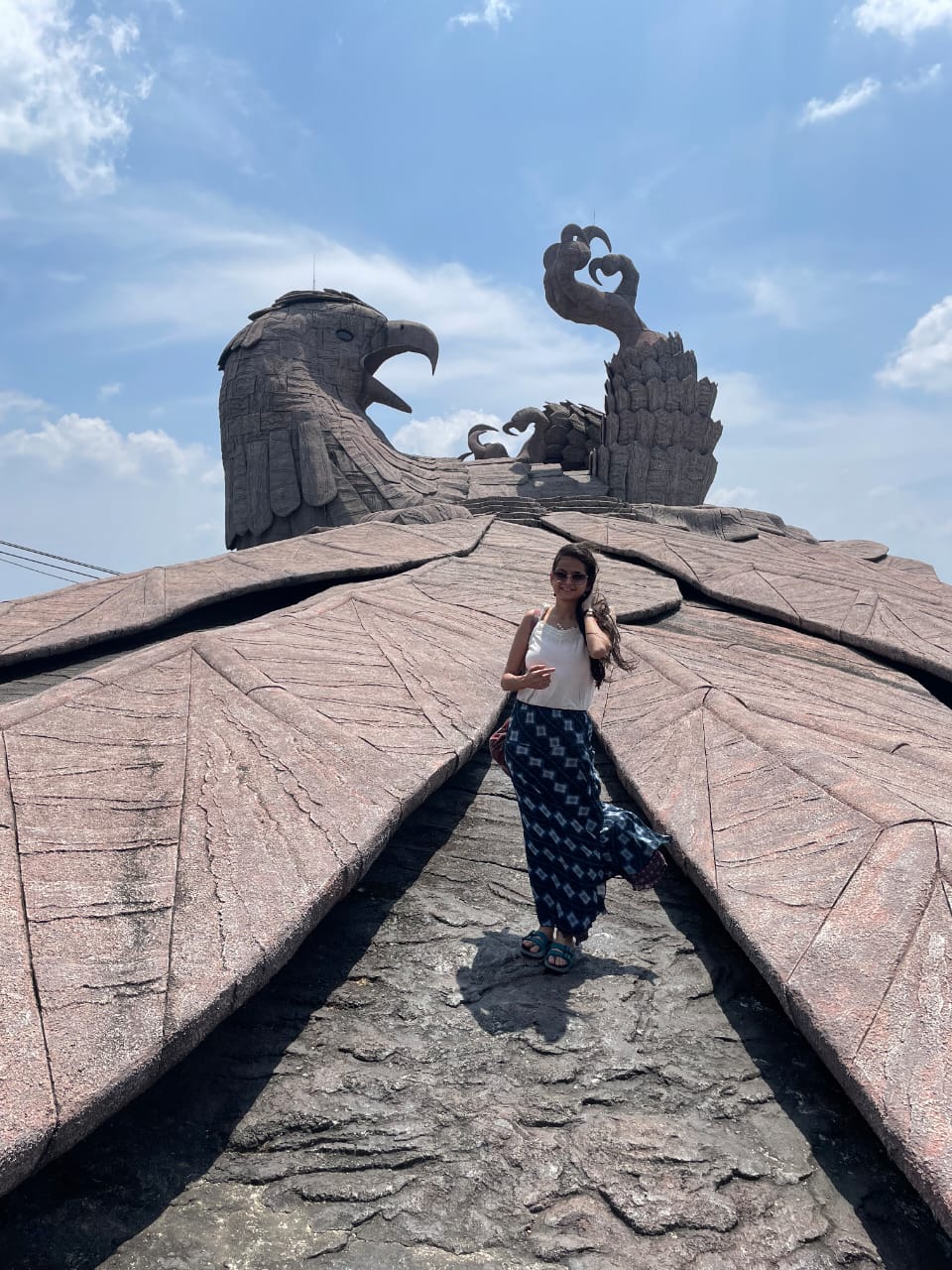
The world’s biggest bird structure and the only one dedicated to women’s safety & valor, Jatayu Earth Center felt like a marvel in itself and one of the must-see Kerala attractions.
Situated at 1200 feet above sea level, it’s a magnificent structure of the mythical bird “Jatayu” from the epic “Ramayana” and is a tribute to women’s safety and valor.
Honestly, the main allure of this destination is its size and the panoramic views of the surrounding hills.
The whole experience also includes an adventure park, a 6D theater, and a museum narrating the heroic story of Jatayu.
We reached around mid-noon with extremely high winds.
While we were told about the ropeway services that took visitors to the hilltop being paused due to high winds, luckily, it had resumed by the time we reached the front of the ticket counter.

Front View of the Jatayu Earth CenterWe had to pay a total of ₹535, approximately $7, per person as an entry fee that included the cable car ride. While the trek was not very strenuous, it was too hot and humid for us to climb on foot.
Nevertheless, due to the strong winds, our ropeway was continuously swaying on its ropes, making the ride scary yet exciting.
Once we reached the top, it was like all hell broke loose. The whipping wind made it challenging for us to stand in one place without losing our footing.
When I look back at my pictures, it seems like I am standing just below a huge fan that’s trying to suck me in 😜.
But given the message and theme it is based on and the adrenaline rush it gave us, it was a good experience.
You might find this as a common item in all the ” best places to visit in Kerala” articles, but it is important to know that it is different than other things to do in Kerala, as it is more of marveling at the man-made creation than the natural wonders Kerala offers in the other parts of the state.
If you are travelling to Kerala, you must visit the Jatayu Earth Center. You can book a private tour here.
To experience Varkala — Kerala’s most happening beach
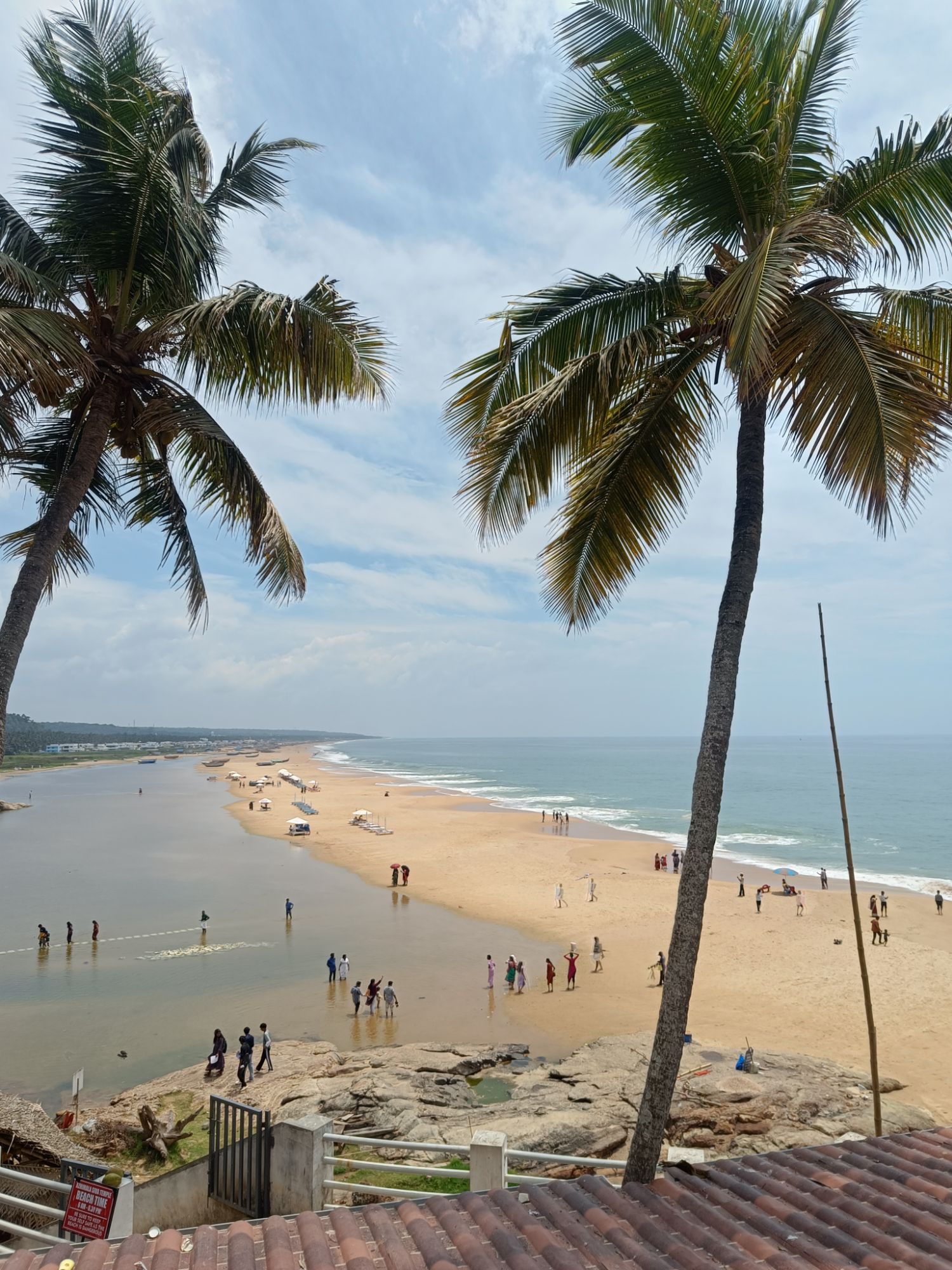
Of all the places we visited on our 10-day Kerala trip, Varkala was the one I had the most fun.
The city is entirely different than the rest of the state, with a clifftop town perched on 15-metre laterite cliffs that drop straight into the Arabian Sea.
The beach sits at the base of the cliffs, accessed by a steep path, and the cliff-top walk is lined with restaurants, yoga studios, and small shops that look out over the water.
The crowd in Varkala skews international — a mix of backpackers, long-term travellers, and European tourists who seem to have settled in for months.
It has a distinctly different energy from the rest of Kerala: unhurried, self-contained, with a faint bohemian quality that grows on you.
We went on our last day of the trip, primarily for the Ayurvedic massage.
We stared at the sunset for hours, sitting on the clifftop.
Shopping at the cliffside shops was another unique experience that I loved. s.
If you have time for only one beach in Kerala, Varkala is the one I would recommend, even if you have visited Mararikulam.
Learn what all you must do there in my full Varkala guide.
Marari vs. Varkala: They are completely different experiences. Marari is quiet, coconut-fringed, and best for slow days on the sand. Varkala is dramatic, social, and better for those who want a beach with a pulse. I’d do both if you have the days. Read about my experience in Mararikulam here.
When is the best time to visit Kerala?
Kerala has two faces, and the best time to visit depends entirely on what kind of trip you want.
November to February is the sweet spot — cool, dry, and clear.
This is when the backwaters are at their most serene, the beaches are swimmable, and the hill stations like Munnar are crisp and green. It is also peak season, which means Alleppey will be crowded and houseboat prices will be higher.
February to March is an underrated window. (We visited in Feb).
The worst of the tourist peak is easing off, the weather is still manageable (warm during the day but not punishing), and prices are more reasonable.
If you are coming from Mumbai or another warm city, February in Kerala will feel perfectly comfortable.
April and May are hot and humid, manageable for hill stations like Munnar, but the coastal areas get sticky. Not impossible, just not ideal.
June to September is the monsoon season.
Kerala receives heavy rainfall. Some backwater routes may be inaccessible. But if you want Kerala with fewer tourists and a raw, elemental quality, the monsoon is worth considering.
October sees a short break in the rains and the arrival of Onam — one of the best times to experience Kerala’s culture.
My honest take: If I had to pick one window, I’d say mid-January to early March. You get good weather, the peak crowds are thinning, and you still have access to everything. That said, if monsoon Kerala sounds appealing to you — slow, green, and immersive — do not let anyone talk you out of it.
How many days do you actually need in Kerala?
The honest answer: more than you think.
For a meaningful trip that covers the key regions — Kochi, Munnar, Alleppey, and one coastal town — allow 10 to 12 days minimum. We did 10 days and came back feeling like we’d seen it properly, but had left threads to pull on a return trip.
If you have 7 days, keep it to two or three places and go deep rather than wide. Kochi + Alleppey + Varkala is a solid, compact route.
If you have 15 days or more, you can bring in Wayanad, Thekkady, Kannur, or the less-visited north.
A rough structure for a 10-day trip from Mumbai:
- Days 1–2: Kochi (Fort Kochi, Mattancherry, Kathakali)
- Days 3–4: Munnar (tea gardens, viewpoints, slow mornings)
- Days 5–6: Alleppey backwaters (houseboat or day excursion + Munroe Island)
- Days 7–8: Marari or Varkala (beach, rest)
- Days 9–10: Varkala or Kovalam (Ayurvedic massage, cliff sunset, Jatayu if time permits)
For the full route with accommodation suggestions and honest timing, see my 10-day Kerala itinerary.
Do you need more reasons?
I stayed in Kerala for 10 fulfilling and rejuvenating days.
Stealing a few days from my hectic lifestyle in Mumbai, Kerala gave me the needed break with many moments to breathe, introspect, and be grateful for everything.
Many foreigners from European countries visit Kerala for its charm and beauty, and we spoke to a few of them who loved the place as much as we did.
If you want a single Indian trip that blends nature, culture, and calm, Kerala is it. Pack light, plan for at least a week, and leave space to just sit and watch the water.
And if you’ve already been, I’d love to hear your Kerala story in the comments below.
Have an enjoyable trip with these Kerala travel tips.
Here Are The Answers To Any Question You Might Have!
Q. What is the best time of year to visit Kerala?
The best time to visit Kerala is between November and February, when the weather is cool and pleasant for sightseeing, backwater cruises, and beach visits. If you love lush greenery and don’t mind occasional showers, the monsoon season (June to September) is magical for Ayurvedic treatments and off-season travel deals.
Q. How many days do I need to explore Kerala properly?
For a short trip, 7 to 8 days are enough to cover highlights like Kochi, Munnar, Alleppey’s backwaters, and a beach town like Varkala or Marari. If you want to explore Kerala more deeply — including Wayanad, Thekkady, and northern gems like Kannur — plan for 12 to 15 days to experience the state’s full diversity.
Q. Is Kerala safe for solo travelers or women traveling alone?
Yes, Kerala is considered one of the safest states in India for solo and women travelers. Most tourist areas are welcoming and secure. As with any destination, stay alert, avoid deserted areas late at night, and use trusted transport and accommodations.
Q. Which are the must-see places in Kerala beyond the usual backwaters?
Kerala is much more than Alleppey’s backwaters. If you love mountains, Munnar, with its rolling tea gardens, is a must. For beaches, head to Varkala’s cliffside shores or the calmer sands of Marari. Adventure seekers can trek in Wayanad or spot wildlife in Thekkady. And if you’re looking for something offbeat, the Jatayu Earth Center is both a cultural and adrenaline-filled experience. (Goes with your list, lets you link to your Jatayu, hill stations, etc.)
Q. What are Kerala’s unique experiences you can’t do elsewhere?
Kerala has a mix of experiences that are hard to find all in one place. You can sail on traditional houseboats, feast on a Sadya meal served on a banana leaf, indulge in an authentic Ayurvedic massage, or watch a Kathakali dance performance in its place of origin. The combination of culture, food, wellness, and natural beauty makes Kerala truly one-of-a-kind.
Q. What should I pack and prepare for when traveling to Kerala (climate, dress, etc.)?
Kerala has a tropical climate, so light cotton clothes are perfect for most of the year. Carry a hat, sunglasses, and sunscreen for the beaches, and comfortable walking shoes for treks or city explorations. If you’re visiting hill stations like Munnar or Wayanad, pack a light jacket because evenings can get chilly. And don’t forget mosquito repellent — especially if you’re staying near the backwaters. Modest clothing is recommended when visiting temples.
Discover more from The Hopping Tales Journal
Subscribe to get the latest posts sent to your email.
Leave a Reply