
Last Updated on:
Kerala is one of the most beautiful states in India. But because it is so different than the Northern or Eastern parts, it can feel significantly different and even catch you off guard with its lifestyle and some rules.
Therefore, while you make your Kerala itinerary, it is important to be prepared for what to expect in God’s own country.
Here are some small yet vital information to keep in mind while you travel to Kerala.
Meanwhile, if you are visiting for the first time, refer to the full Kerala travel guide for slow travellers for logistics like how to get around, where to stay, and what to eat.
For what to carry, see the Kerala packing list.
If you are still in your planning stage, here are the best experiences in Kerala you must not miss.
- Plan Your Route, Not Just Your Destination.
- Speaking Hindi Won't Help You Much Here
- UPI Works in Kerala, But It Is Always Safe to Carry Some Cash
- Best Time to Visit Kerala: Check the Weather, Not Just the Forecast
- Kerala Temple Rules You Must Know
- It Is Not Easy to Get Alcohol in Kerala – Be Prepared
- Kerala Street Shopping: Haggling Tips That Work!
- Taste Kerala on a Plate: Must-Try Dishes!
- Kerala Can Feel More Tiring Than Other States in India — Plan for It
- Plan a Lazy Trip to Kerala—Don’t Rush
- Questions you might have!
Plan Your Route, Not Just Your Destination.
If you prefer last-minute travel, one-way tickets, or spontaneous trips, Kerala can be frustrating, as distances, seasonal timing, and transport options can be tricky to manage.
You can explore almost every landscape here, and understandably, you would want to cover everything.
However, it would be better to pick your preferences beforehand so that you do not miss the important spots.
For instance, we had chosen Kerala as a destination to be around a water body as much as we could, and so we skipped Munnar, which is a fantastic destination for mountain lovers.
Or if you wish to stay near the beaches, pick a destination that is less crowded and has clean beaches.
We stayed 2 days at a resort with a private beach in Mararikulam and absolutely loved our experience.
But you do you!
If you’re planning to stay at Kochi, check out my Kochi travel guide. Even though you haven’t planned on halting at Kochi, check out the blog to see what you could be missing.
But naturally, picking the best cities to visit in Kerala can be pretty confusing and overwhelming. Here are a few cheat codes:
- Speak to a few travel agents with whom you can share your preferences and ask for suggestions before planning.
- If you want to do the trip without a tour package, booking guided tours is always a good alternative.
- Avoid visiting only famous tourist places; they can be crowded and not exactly like you see in pictures and travel brochures.
- Instead, look for alternate destinations that offer the same geographical landscape but are comparatively less crowded and less famous.
We chose to experience the backwaters in Munroe Island instead of Alleppey, which is comparatively less known and more fulfilling. You can get the planning details in this Munroe Island Guide.
Speaking Hindi Won’t Help You Much Here
In other parts of India, Hindi is widely spoken. However, South Indian states like Kerala are different.
Malayalam is the local language, and most Keralites outside Kochi and Varkala are more comfortable in English than Hindi.
In rural areas and backwater villages, hardly anyone understands Hindi.
What works instead:
- English, even broken English, will take you further than Hindi in almost every situation
- A few Malayalam words genuinely help:
- Nandi (thank you),
- Shari (okay/yes, got it),
- Ethra aanu? (how much?) — locals visibly appreciate the effort
- Google Translate can be a great help for the rest
Usually, Keralites are warm and helpful. The communication is just different from what you might be used to.
UPI Works in Kerala, But It Is Always Safe to Carry Some Cash
UPI works fine at hotels, Varkala cliff cafes, and mid-range restaurants. But if you go into the interiors or villages, you would need cash.
Places that are often cash-only:
- Public ferries and KSRTC buses (Always cash only)
- Village homestays (for extras like breakfast add-ons, canoe rides)
- Roadside tea stalls and local lunch spots outside tourist areas
- Temple counters and donation boxes
- Auto-rickshaws outside Kochi and Thiruvananthapuram
The QR codes exist at some of these places, but either connectivity is spotty, or the code hasn’t been updated in months.
Practical fix: Keep ₹1,500–2,000 in small notes with you at all times. ₹50 and ₹100 notes are the most useful — vendors in village areas often can’t break a ₹500 note.
ATMs are available in towns but sparse in backwater and hill areas.
Best Time to Visit Kerala: Check the Weather, Not Just the Forecast
Quick Tip: Pack a light rain jacket and breathable layers; nights can be cool even in winter hill stations.
Kerala is one of those rare destinations that look lovely in all weathers.
While the peak tourist time in Kerala is from October to February, monsoons are also a good time to visit the state to avoid crowds and witness the lush greenery.
However, you may have to brace for heavy downpours and a damp climate.
Pack rain gear with you.
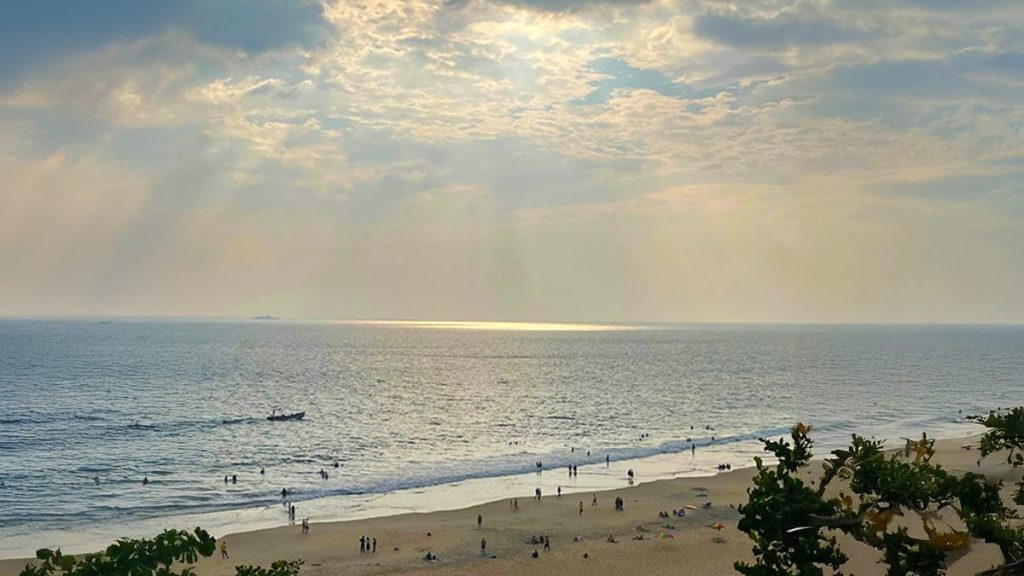
View of the Varkala beach from the North cliffMoreover, don’t trust long-range forecasts.
Check the weather 3–5 days before you go.
If you pick the winter months (Oct-Jan), Munnar could be freezing cold, while other parts of the state, like Kochi, Trivandrum, Alleppey, etc., would be pleasant. However, summers could get extremely hot and humid (even as early as March).
We visited Kerala at the end of February, expecting pleasant weather if not winter. However, we were disappointed, as summer had already crept into most of the cities.
It was sweltering hot, significantly dampening our mood and experience.
While the beaches were a respite in the evenings, it was pretty painful going around the city, trying not to get heatstroke.
TL;DR: Do not rely on the weather forecast while you plan the trip.
Speak to your travel agents or booking agents to know the weather status. Or you can do a quick rain check just before the trip and reshuffle your clothes if needed.
Kerala Temple Rules You Must Know
Kerala’s temples have a few rules that are entirely different than the rest of the country.
Hindu-only entry is enforced.
Kerala’s most prominent temples — Padmanabhaswamy in Thiruvananthapuram and Guruvayur are the most famous examples; they restrict entry to Hindus.
There’s usually a sign. It’s not flexible, and it’s not negotiable, so check before making a trip to a specific temple.
If you are a non-Hindu, you might be able to get into the outer area, but won’t be allowed in the inner sanctum.
Dress Code: What to Wear & What to Avoid!
Temple dress codes are a big deal in Kerala State. While it is advisable to wear modest clothing wherever you go, you need to be extra careful when visiting temples.
Many temples, like the very famous Padmanabhaswamy temple, have specific & strict dress codes:
- Men: carry a mundu/dhoti or long trousers — many temples require bare body & bare legs or a mundu.
- Women: saree, half-saree, skirts or a modest dress; avoid exposed shoulders in sanctums.
- No shorts /jeans in sanctum areas.
- Carry a scarf or shawl to cover up quickly
We visited the Janardhana Swamy Temple in Varkala, a 2000-year-old temple. Surprisingly, men wearing shorts were not allowed to enter, and those wearing full pants or jeans had to open their shirts and hang them on one arm before entering the main sanctum sanctorum of the temple.
Timings matter. Kerala temples typically open for two darshan windows: early morning (around 4–6 AM) and evening (around 5–8 PM). They close in the afternoon. Showing up at 2 PM usually means a closed gate — plan.
Related Read: Packing tips for Kerala trip
It Is Not Easy to Get Alcohol in Kerala – Be Prepared
This could be weird information for a lot of first-timers, even Indians who’ve had no trouble finding a beer in Goa or Mumbai.
Most restaurants in Kerala, including mid-range ones, don’t have liquor licenses.
You can’t pick up wine at a supermarket either. It’s more restricted than most Indian states.
Where you can get it:
- BEVCO shops (Kerala State Beverages Corporation) — government-run stores available in most towns. Easy to find on Google Maps. Selection is decent, prices are fixed, and there’s usually a short queue.
- Hotels with bar licenses — typically 4-star and above. Some boutique resorts also have them. Worth checking before you book if this matters to you.
- Toddy shops (kallu shaap) — serve locally tapped palm wine, not covered by the same licensing rules. Usually paired with fried fish, genuinely cultural, worth doing at least once. Toddy ferments fast, so get there early in the day.
BEVCO shops are closed on dry days (national holidays, local festivals, election days) — plan around it if you’re visiting during any of these.
Kerala Street Shopping: Haggling Tips That Work!
If you are good at bargaining, you would surely enjoy your small wins shopping.
Cities like Varkala and Alleppey are visited by lakhs of tourists every year and are extremely touristy when it comes to street shopping and experiences.
A useful Kerala travel tip: Before you shop for clothes or accessories on the famous Varkala cliff or book yourself a cruise over the backwaters, bargain hard.
If you are unaware of the rates of the backwater cruise, it would be best to speak to your guide or hotel managers to know the reasonable price of the experience.
Especially if you are not Indian, you can be easily fooled into paying exorbitant prices unless you bargain.
Tip: Start at 40-50% of the seller’s price and work up. Be firm but polite and respect them if they are adamant. Locals respond better to a smile than to aggression. :)
Related: Get a free guide to enjoying experiential, slow vacations here.
Taste Kerala on a Plate: Must-Try Dishes!
Disclaimer: Kerala food is full of flavors and textures but can be spicy. If you have a sensitive palate or prefer simple, non-spicy food, it would be better to inform your host beforehand.
While travelling anywhere in India, let alone Kerala, do not miss out on street food and traditional cuisine to get the real sense of the food.
Kerala cuisine is a celebration of spice, coconut, and tradition. Don’t miss a Sadya, Kerala’s multi-course vegetarian feast served on a banana leaf (think rice, sambar, avial, thoran, pickles, and payasam), loved by both locals and visitors alike.
Try Meen Pollichathu, a coastal specialty: spicy fish wrapped in banana leaf and grilled for smoky flavor.
For everyday meals, you can opt for soft appams with stew or flaky Kerala parotta paired with fiery curry.
And if the flavor board seems overwhelming for you, like it did for me, just ask for a bowl of ‘curd-rice,’ a comfort food made with rice and curd tempered with mustard seeds and curry leaves.

Kerala Can Feel More Tiring Than Other States in India — Plan for It
The humidity is the main thing. Even in peak season (October–February), coastal Kerala sits at 75–90% humidity. If you’re from Mumbai, you’re somewhat prepared. If you’re from Delhi or Pune, it’s a different kind of heat. Two hours outdoors in February in Kochi will tire you more than four hours of Delhi street-walking in October.
Travel times are longer than they look. Kochi to Munnar (about 130 km) takes 3.5–4 hours on the ghats. Alleppey to Varkala (80 km) takes nearly 2.5 hours.
Build this into your day planning, especially if you have an evening train or ferry to catch.
Backwater rides are sunny, not shaded. A 2–3 hour canoe or houseboat ride in open water with reflected sun off the water is exhausting.
Carry a scarf, sunscreen, and water — this Kerala packing list details many such things you must carry to Kerala.
The simple fix: Plan one fewer activity per day than you think you need. You’ll actually enjoy what you do more, and your evenings will be better for it.
Plan a Lazy Trip to Kerala—Don’t Rush
Kerala is a gorgeous place and is called ‘God’s own land.’
Its backwaters, beaches, and laid-back lifestyle help you relax & rejuvenate deeply. Hence, plan a slow trip!
As I said, there would be many places you would want to cover, but you would never be able to enjoy the best parts if you do not spend at least a day in each place.
Whether it is the cliff beaches of Varkala or the backwaters of Alleppey, spend at least a day around them, gazing at the sun, sipping on your favorite drinks.
Indulge in activities that relax you, just like an authentic Ayurvedic massage.
However, ensure that you choose a good center.
Here is a detailed review of an Ayurvedic massage, with tips on choosing a center.
“Kerala rewards the curious traveler”.
So, an unpopular Kerala Itinerary tip: go slow, stay flexible, and let the state’s beauty unfold at its own pace.
If this helped, share with someone planning Kerala and drop your tips in the comments.
Questions you might have!
What is the best month to visit Kerala?
To enjoy cool, dry days, plan your trip around October to Feb. For the lush monsoon view, the best time to visit Kerala is from June to Sept. However, different regions could have different weather and temperatures.
How many days are enough to spend in Kerala?
For a relaxed trip, 7 to 10 days are enough. You can visit 3–4 spots (covering beaches, backwaters, hill stations, and cities) with one day each. You can refer to a Kerala itinerary to understand where to spend how many days.
What should I wear to Kerala temples?
Keralite traditions call for strict dress codes in temples. For men, you can wear a mundu or long trousers; for women, a saree or blouse and skirt will be an apt outfit. Do carry a scarf to cover your shoulders.
Are houseboats expensive in Kerala?
The prices for the day trip and night stay can vary based on the seasons and boat quality. The best way is to check at the hotel/reception for going rates and negotiate. Always negotiate respectfully.
Is Kerala safe for tourists?
Yes. Kerala consistently ranks among India’s safer states. The public is generally educated and helpful, and day-to-day travel — even solo — is comfortable. Standard travel awareness applies, as it would anywhere.
Can I use UPI everywhere in Kerala?
In cities and tourist areas, yes. On public ferries, KSRTC buses, village stalls, and temple counters — often no. Always carry ₹1,500–2,000 in small notes as backup.
Is alcohol available in Kerala?
Not as easily as in Goa or Mumbai. Most restaurants don’t have bar licenses. Government-run BEVCO shops are the most reliable option and are available in most towns. Hotels with bar licenses (usually 4-star and above) also serve alcohol.
Discover more from The Hopping Tales Journal
Subscribe to get the latest posts sent to your email.