
Georgia is weirdly different. Neither does it feel completely like Europe nor Asia, and this in-between feeling is what makes it unforgettable.
At the same time, travelling here becomes much easier when you know a few basics beforehand — transport, cash, weather, food, and how things actually work on the ground.
Before you pack your bags, here are some Georgia travel tips that genuinely matter.
This is not a generic checklist, but practical advice from an Indian who has actually travelled through Georgia and made a few mistakes along the way.
For planning your Georgia itinerary and transport, read this Georgia planning guide
- 1. How to Travel to Georgia – Best Flights
- 2. Is Georgia Visa-Free?
- 3. What Works In Georgia: Cash or Card?- Carry both
- 4. Georgians Wake Up Late — Plan Accordingly
- 5. What Footwear To Carry? Anything Comfortable
- 6. How To Travel Within The Country on Different Budgets?
- 7. Do you Get Vegetarian Food in Georgia?
- 8. Do You Always Need Mineral Water?
- 9. What to Wear in Georgia- Dress Code
- 10. Useful things to carry
- 11. SIM Cards & Internet in Georgia
- 12. Dress for Varied Temperatures
- 13. Is Georgia Safe? Safety and the Political Situation
- 14. Is English spoken in Georgia?
- 15. Can You Travel To Georgia With Family & Kids?
- 16. What Apps To Download For Georgia:
- 17. Common Mistakes First-Time Travellers Make in Georgia
- 18. Sakartvelo: The Real Name of Georgia You Should Know
- Frequently Asked Questions About Travelling to Georgia
- How do you say "hi" in Georgian?
- What does Didi Madloba mean?
- How do you reply to "thank you" in Georgian?
- How many days are sufficient for a Georgia trip?
- What is the best time to visit Georgia?
- Is Georgia safe for solo female travellers?
- Is Georgia vegetarian-friendly?
- Is English widely spoken in Georgia?
- Can I drink tap water in Georgia?
- Do I need a visa for Georgia from India?
- Why is Georgia rejecting the Indian visa / e-visa?
- Is Georgia cheaper for Indians?
1. How to Travel to Georgia – Best Flights
You can find direct flights from Mumbai, but they are very limited. Mostly, flights to Georgia from India have layovers in Dubai, Sharjah, or Istanbul.
IndiGo, Air Arabia, and flydubai are a few airlines with more connecting flights.
Always compare rates on flight aggregators to compare options across airlines before booking.
Tip: If you are travelling to Georgia for the first time through Indigo, carry your own food. They do not provide free food, unlike other airlines.
2. Is Georgia Visa-Free?

Georgia does accept visitors visa-free, but it varies by country.
For example, Indian passport holders can enter Georgia visa-free with a valid US, UK, or Schengen visa.
Rules for Indian passport holders change periodically, so always confirm your eligibility on the official Georgian e‑visa portal before you apply or book flights.
You can check your eligibility on the official evisa.gov.ge.
Check out my detailed Georgia Visa & Insurance guide for the visa application process and Insurance Guidelines.
Travel Insurance for Georgia
This one is non-negotiable: travel insurance is mandatory to enter Georgia.
It is checked at the border and immigration, and without it, you may be refused entry or required to purchase a policy on the spot at inflated rates.
Look for a policy that covers emergency medical, hospitalisation, and evacuation.
3. What Works In Georgia: Cash or Card?- Carry both
Georgia’s currency is the Georgian Lari (GEL). Currently, 1 Lari is approximately 0.37$.
The best practice would be to convert your currency into USD and exchange on arrival.
Rates at currency exchange offices in the city are significantly better than at the airport, so just exchange a small amount at the airport for your taxi or transfer, and then find a proper exchange office in Tbilisi.
For ATM withdrawals, Basis Bank ATMs charge zero withdrawal fees for foreign cards, which is unusually good. Avoid random ATMs at tourist hotspots.
While you can use credit cards for restaurants, hotels, and supermarkets, it is best to carry cash while travelling.
In smaller towns, villages, markets, and guesthouses, carrying cash is better.
You can know how much cash to carry in my detailed breakdown of Georgia trip costs from India.
4. Georgians Wake Up Late — Plan Accordingly

If you are an early riser expecting an 8 am start, Georgia will test your patience.
Georgians are, by temperament and tradition, late risers.
If you are travelling for the first time to Georgia, you will be surprised to learn that restaurants often don’t open until 10 am or later.
Even in cities, eateries and shops have their own timing.
The best thing: Almost all cities in Georgia are walkable.
You can use the early mornings to explore your neighbourhood on foot, as it is perfect for photography in Tbilisi Old Town before the crowds and heat arrive.
We walked around our hotel in the early morning, enjoying the ornamental windows and balconies, while speaking to a few locals who knew English.
If you’re spending a few days in the capital, read my Tbilisi travel guide for Indian travellers.
5. What Footwear To Carry? Anything Comfortable
Georgia, particularly Tbilisi’s Old Town and Sighnaghi, is extraordinarily pedestrian-friendly.
With wide pedestrian streets, uneven cobblestones, and balconied buildings leaning over narrow lanes, this is a country meant to be explored on foot.
Best Georgia travel advice: Wear comfortable walking shoes that can handle cobblestones. Your feet will thank you. Avoid heels.
6. How To Travel Within The Country on Different Budgets?
- Bolt and Yandex are reliable & affordable cab services.
- Georgia has marshrutkas, shared minivans, that are cheap but can be slightly chaotic and uncomfortable.
- For more comfort and reliability, you can book trains, cabs, and buses on 12Go Asia.
- An alternate platform is GoTrip, if you want to keep the same car for the entire trip, like us.
- You can also rent a car through Local Rent, especially if you plan to do day trips from Tbilisi on your own time. car.
Get a full breakdown of transport options, their cost, and the tips in the Georgia travel guide.
7. Do you Get Vegetarian Food in Georgia?

Georgian food is delicious and surprisingly vegetarian-friendly too. (Here’s what to eat and what to watch out for.)
However, you do have to pay attention.
While the Georgian diet is meat-based, some Georgian dishes have vegetarian and vegan versions. Additionally, breads, salads, bean dishes, and egg-based preparations are everywhere.
You can also find vegetarian pizza and pasta in cities, though some fresh pasta may contain egg.
And if you need a full Indian meal, Indian restaurants are available in Tbilisi and major tourist areas — though they tend to be priced on the higher side.
Food delivery: In Tbilisi and other cities, Wolt & Glovo are the dominant food delivery apps. Download it if you want a quiet night in.
8. Do You Always Need Mineral Water?
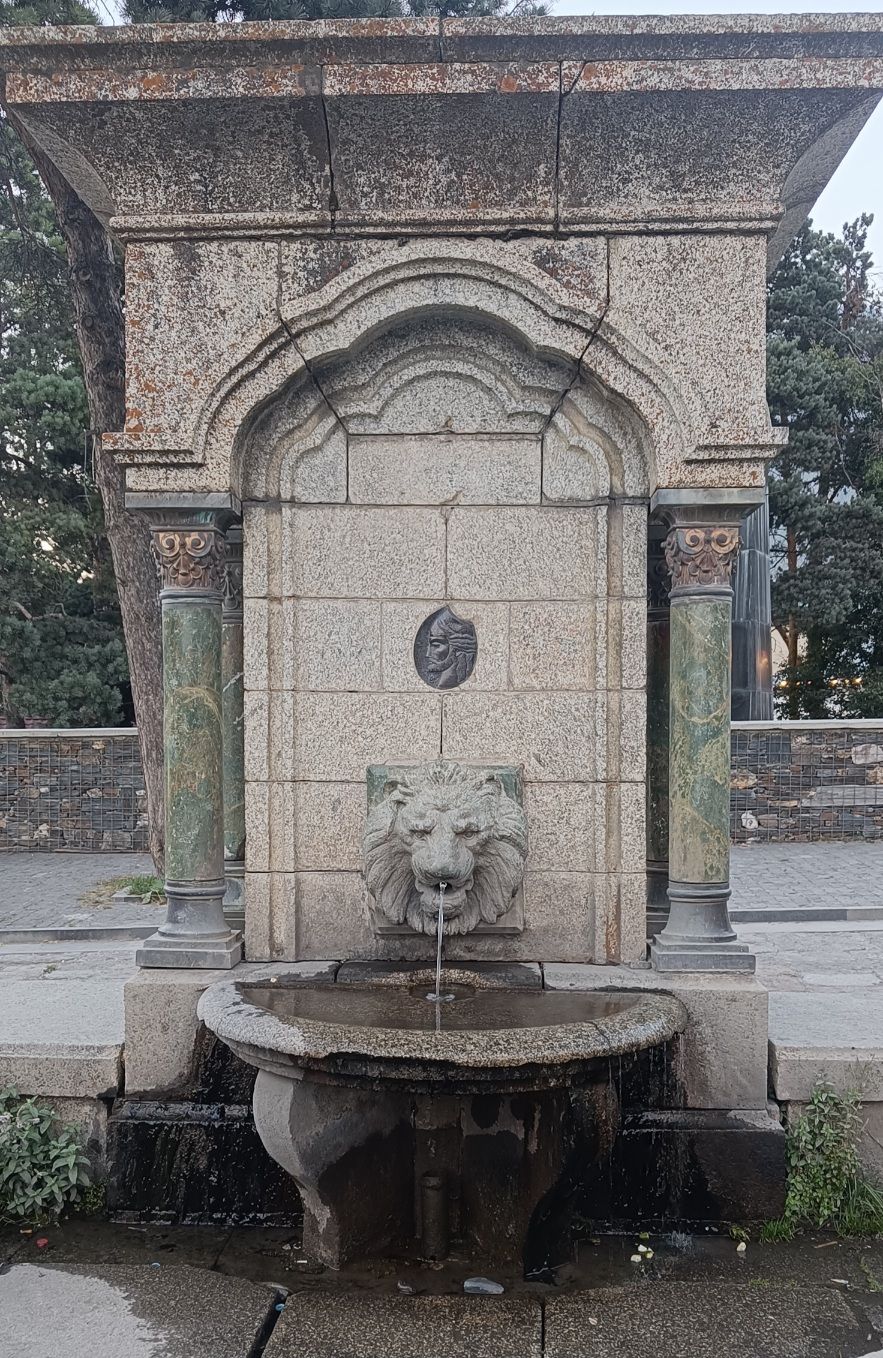
No, tap water in Georgia is safe to drink across the country, including in smaller towns.
Carry a reusable water bottle. The water is clean, cold, and often quite good. Avoid buying plastic bottles, carry your own, and refill freely.
We drank the tap water from a water fountain at the entrance of the Lagodekhi National Park and in Mtsaminda Park in Tbilisi, and loved it.
9. What to Wear in Georgia- Dress Code
Georgia is a deeply Orthodox Christian country, and its churches and monasteries are active places of worship, not just tourist sites.
At most religious sites, women are expected to cover their hair and shoulders, and both men and women should cover their knees.
Pack a light scarf & sarong with you at all times. Most churches have spare shawls & scarves available at the entrance, but it’s more comfortable to have your own.
They also run out in peak seasons, and you might have to wait before you can enter. Better carry your own.
Quick Tip: Carry a light jacket even in summer if you’re visiting Kazbegi. Mountain temperatures drop sharply after sunset.
10. Useful things to carry
- Power adapter. Georgia uses European Type C/F plugs. In case you forget, you can buy one in cities for 10 Lari.
- Carry some cash in USD or EUR for exchange on arrival
- Offline maps – Download regions before landing
- Reusable water bottle
I have mentioned some more must-haves for an international trip in this packing list for Indians.
11. SIM Cards & Internet in Georgia

Magti and Silknet are the two most reliable but physical SIM providers in Georgia.
You can also use an eSIM and buy it through the Yesim app.
It is easy to apply for an eSIM in Yesim before you land in Georgia.
On the other hand, Magti tourist SIM cards will be available at Tbilisi airport or in the city, though city stores usually offer better prices.
But for them, you would need to register through Passport only when you land.
Mobile internet is fast and reliable even outside Tbilisi.
12. Dress for Varied Temperatures
Georgia’s weather changes significantly depending on altitude and season.
- Tbilisi in summer is hot and dry.
- Kazbegi in the mountains can be cold even in July.
- Kakheti in autumn is golden and mild.
- Lagodekhi in the forest feels different again.
Layer thoughtfully.
Even in summer, pack a light jacket for evenings and a warmer layer if you’re heading to mountain regions.
Good walking shoes that handle both cobblestone streets and uneven mountain trails are worth packing rather than leaving to chance.
13. Is Georgia Safe? Safety and the Political Situation

Georgia is, in day-to-day terms, a safe country. Tbilisi consistently ranks among the safer cities in the region for tourists.
But it is still important to use common sense in crowded areas and on public transport.
On the political situation: There have been ongoing protests in Tbilisi, primarily around Parliament, following elections in late 2024.
As of 2026, demonstrations continue intermittently. This does not affect tourism in any meaningful way. The protests are concentrated in specific areas (mainly Rustaveli Avenue near Parliament).
- Avoid those areas after dark if protests are active, and check your country’s travel advisory for updates.
- However, you might find graffiti on walls all across the city. It is hard to miss that the city is under protest, even if you don’t see any protestors.
- Also, avoid discussing the current wars or political situations in public.
We witnessed one incident when the Georgian Parliament Building Complex in Tbilisi was restricted for entry, and a few young men were sitting near it with banners in hand.
But otherwise, we felt absolutely safe wandering around in the night in the main city areas.
Avoid travel to the regions of South Ossetia and Abkhazia; these are Russian-occupied territories with genuine security risks.
14. Is English spoken in Georgia?
Yes, people speak English in Georgia, but not widely. However, most signs in tourist areas include English transliterations.
It would be best to learn a few words in Georgian to communicate as locals would genuinely appreciate the effort:
- Gamarjoba (გამარჯობა) — Hello
- Madloba (მადლობა) — Thank you
- Ara (არა) — No
- Diakh (დიახ) — Yes
- Bevri kargia (ბევრი კარგია) — Very good
Download the Google Translate app with the Georgian language pack for offline use.
15. Can You Travel To Georgia With Family & Kids?
Georgia is a genuinely child-friendly culture. Travelling with kids here is easy in terms of reception.
Good for families with children: Tbilisi (manageable, walkable, lots of visual interest), Sighnaghi (small, pretty, flat enough), Batumi (beach, aquarium, seafront promenade), Kakheti (slow pace, open space, vineyards to wander).
More challenging with young children: Kazbegi (long mountain road, altitude), long marshrutka rides (cramped, hot, no stops on demand).
16. What Apps To Download For Georgia:
- Bolt (taxis)
- Wolt (food delivery)
- Yandex Maps (better for Georgian roads than Google in some areas)
- Google Translate (Georgian offline pack)
17. Common Mistakes First-Time Travellers Make in Georgia
- Exchanging all the money at the airport- Look for exchange counters in the city
- Underestimating mountain travel times- It can take longer than you expect. Plan accordingly
- Assuming everyone speaks English- Always use Google Translate
- Not carrying cash in smaller towns- Cards are not accepted everywhere.
- Packing only summer clothes for Kazbegi- It can get colder in the mountains in the mornings and evenings.
- Assuming the marshrutka has a fixed departure time- marshrutkas leave when they’re full. If you have a tight connection, book a private car.
- Visiting Sighnaghi midday in summer – the heat and the tour guide union situation make this the worst time to go. Either early morning or skip it. (Read more about it in my Kakheti guide)
18. Sakartvelo: The Real Name of Georgia You Should Know
Interestingly, “Georgia” isn’t what locals call their country. In the Georgian language, it’s known as Sakartvelo, and the people refer to themselves as Kartvelebi, rooted in the ancient region of Kartli.
These were all the tips you need to have a comfortable trip to Georgia.
Georgia rewards travellers who slow down.
For example, Kakheti deserves far more time than most travellers give it. Read why you must spend 2 days in Kakheti in my detailed Kakheti blog.
Walk through the old streets of Tbilisi, eat one more khachapuri than you planned to, sip homemade wine in Kakheti, and watch the mountains change colour in Kazbegi.
It is the kind of place that stays with you long after the trip ends.
Have you been to Georgia? Share what surprised you most in the comments below.
Planning your trip? Save this post for later — and if you found it helpful, share it with someone who’s been thinking about Georgia. Also, read my detailed Georgia Travel Guide.
Frequently Asked Questions About Travelling to Georgia
How do you say “hi” in Georgian?
“Hello” in Georgian is Gamarjoba (გამარჯობა), pronounced gah-mar-JO-ba. It works for any time of day and any person. Locals genuinely light up when a visitor tries it.
What does Didi Madloba mean?
Didi Madloba (დიდი მადლობა) means “thank you very much” in Georgian. Madloba on its own means “thank you” — adding Didi (big/great) makes it more emphatic.
How do you reply to “thank you” in Georgian?
The standard reply is Ara ras (არა რას), which roughly means “don’t mention it” or “it’s nothing.” Georgians don’t expect tourists to know these, which makes it all the more effective when you do.
How many days are sufficient for a Georgia trip?
A week (7 days) gives you a solid introduction. A 7-day Georgian itinerary will cover Tbilisi, Mtskheta, and Kakheti. If you want to add Kazbegi (mountains) or Kutaisi, you need 10 days minimum. Here’s my complete 10-day Georgia itinerary.
What is the best time to visit Georgia?
Spring (April–June) and Autumn (September–November) are the sweet spots. Winter works well for Tbilisi and Batumi, and Gudauri for skiing. Read the more detailed information on the best time to visit Georgia
Is Georgia safe for solo female travellers?
Yes, Georgia is considered safe for solo female travellers. Street harassment is rare, locals are generally helpful rather than intrusive, and cities like Tbilisi have a visible and active tourism culture that keeps things relatively well-monitored.
Is Georgia vegetarian-friendly?
Georgian food has a strong tradition of vegetable and legume dishes. Look for dishes like lobiani, pkhali, Georgian salad & Khachapuri. In Tbilisi, vegetarian-friendly, Indian, and even vegan cafés are easy to find. In smaller towns and villages as well, bread, cheese, eggs, and salads are almost always available.
Is English widely spoken in Georgia?
In Tbilisi and major tourist areas, English is spoken well enough to get by comfortably. In smaller towns and villages, older locals may speak Russian as their second language rather than English. Google Translate can be a great help.
Can I drink tap water in Georgia?
Yes. Tap water in Georgia is safe to drink, including in smaller towns and most villages. It is clean, cold, and often sourced from mountain springs. Carry a reusable bottle and refill freely.
Do I need a visa for Georgia from India?
Indian passport holders would need a visa for Georgia, which can be applied for online. However, if you hold a valid visa from the USA, UK, EU Schengen area, or a few other countries, you can enter Georgia without a separate Georgian visa.
Why is Georgia rejecting the Indian visa / e-visa?
Most Georgian e-visa rejections for Indian applicants come down to a few common reasons: incomplete documentation, inconsistencies between the application and supporting documents (like hotel bookings or travel history), insufficient proof of funds, or a travel history that raises flags.
Is Georgia cheaper for Indians?
Yes, significantly. Georgia is one of the most affordable destinations for Indian travellers in terms of real purchasing power. With a European-like feel, it is a cheaper alternative.
It is not as cheap as Southeast Asia, but for the quality of food, safety, and experience, the value is genuinely excellent.
Discover more from The Hopping Tales Journal
Subscribe to get the latest posts sent to your email.
Leave a Reply