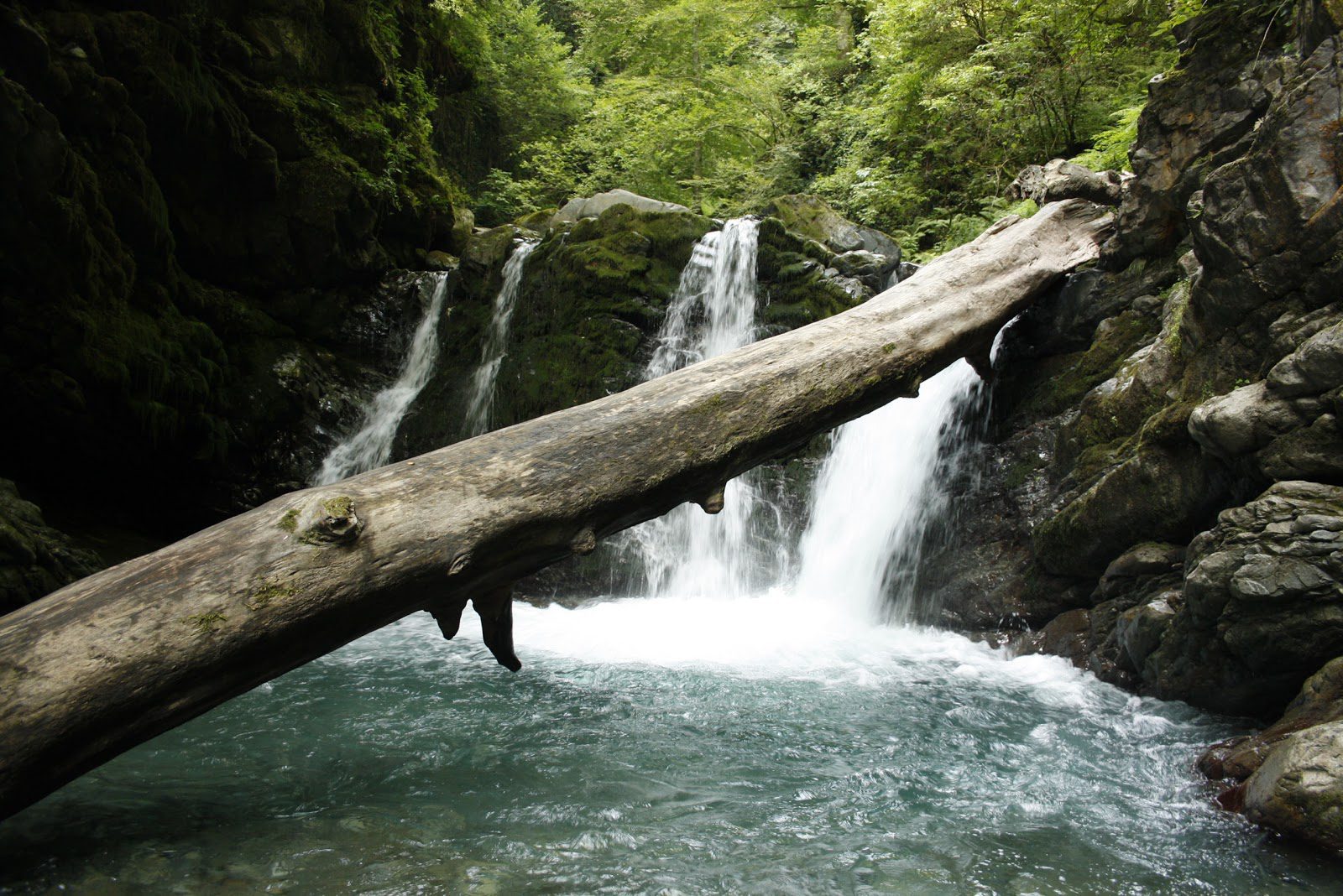
| Detail | Information |
|---|---|
| Location | Lagodekhi, Kakheti region, Georgia |
| Distance from Telavi | ~1 hour by car |
| Trek difficulty | Easy to Moderate |
| Duration | ~2.5 hours each way (5 hours total) |
| Best time to go | April–June, September–October |
| What to carry | 2 litres of water, snacks, trekking shoes |
| Entry | Free for Rocho waterfall, register at the park office |
First Impressions
I am not someone who treks or hikes often, but the hike to the Rocho (Black Grouse) Waterfall at the Lagodekhi National Park made me fall in love with hiking in such green terrains, even though the waterfall didn’t turn out to be extraordinary.
It also turned out to be one of the most unique and memorable days of my entire Georgia trip (Steal my detailed 10-day Georgia travel guide).
If you are reading this, you are probably considering this trek.
Here is all you need to know about the Lagodekhi national park trek and why you SHOULD do this trek for the satisfaction it gives at the end.
How to Reach Lagodekhi National Park?
Lagodekhi National Park is approximately one hour from Telavi by car. The park is in the far east of the Kakheti region, close to the border with Azerbaijan.
From Telavi, where we stayed at the Seventeen Rooms hotel(which, btw, is a gorgeous accommodation and highly recommended), we continued our journey to the Lagodekhi national park with our private driver.
It took us an hour to reach through a scenic drive across farmlands, small residential areas, and mountain views.
Tip: You can also do a day trip from Tbilisi. The best way would be to get a private driver or a private guided tour. ( Check rates for a full-day guided tour to Ninoskhevi waterfall)
When to Go to Lagodekhi National Park?
The best time to visit the national park is from May to October. The weather is pleasant, and it is comfortable to hike mountain trails.
How to Register at the Lagodekhi National Park
Once you reach the park entrance, you will need to register at the park office before starting, especially if you are visiting the park for the first time.
While I did see some trekkers go ahead without registering ( they must be seasoned trekkers), I would highly recommend you register, as the ranger at the office will help you with directions and other useful details.
You do not need a permit to visit the Rocho (Black Grouse) waterfalls. But if you wish to visit the Black Rock Lake, you will need to present your passport for the Border Police registration.

The ranger who met us spoke excellent English, having lived in London for a few years, which made it easier for him to answer all our questions in fluent English.
Firstly, we enquired about the various treks available in that park and their distance, and chose the shortest one to the waterfall.
There are 5 treks in the national park, ranging from very easy to difficult. The shortest was the Rocho (Black Grouse) Waterfall, at 10km return, which we chose to do.
He explained the path we were supposed to walk and the several milestones that would help us understand the distance left.
He also gave us a paper map on request, marked with the trail in Georgian, explaining the two checkpoints along the route; the picnic area with benches beside the river, and the iron bridge connecting two mountains.
He also warned us about the 700 metres immediately before the waterfall, where the trail becomes steep and slippery, and we were supposed to be extra careful.
We started in the morning when it was a bit humid and hot. Thankfully, the sun was kind, and we got no direct sun on our heads, making it easier to complete the hike comfortably.
What Does Lagodekhi National Park Look Like: The Green Room
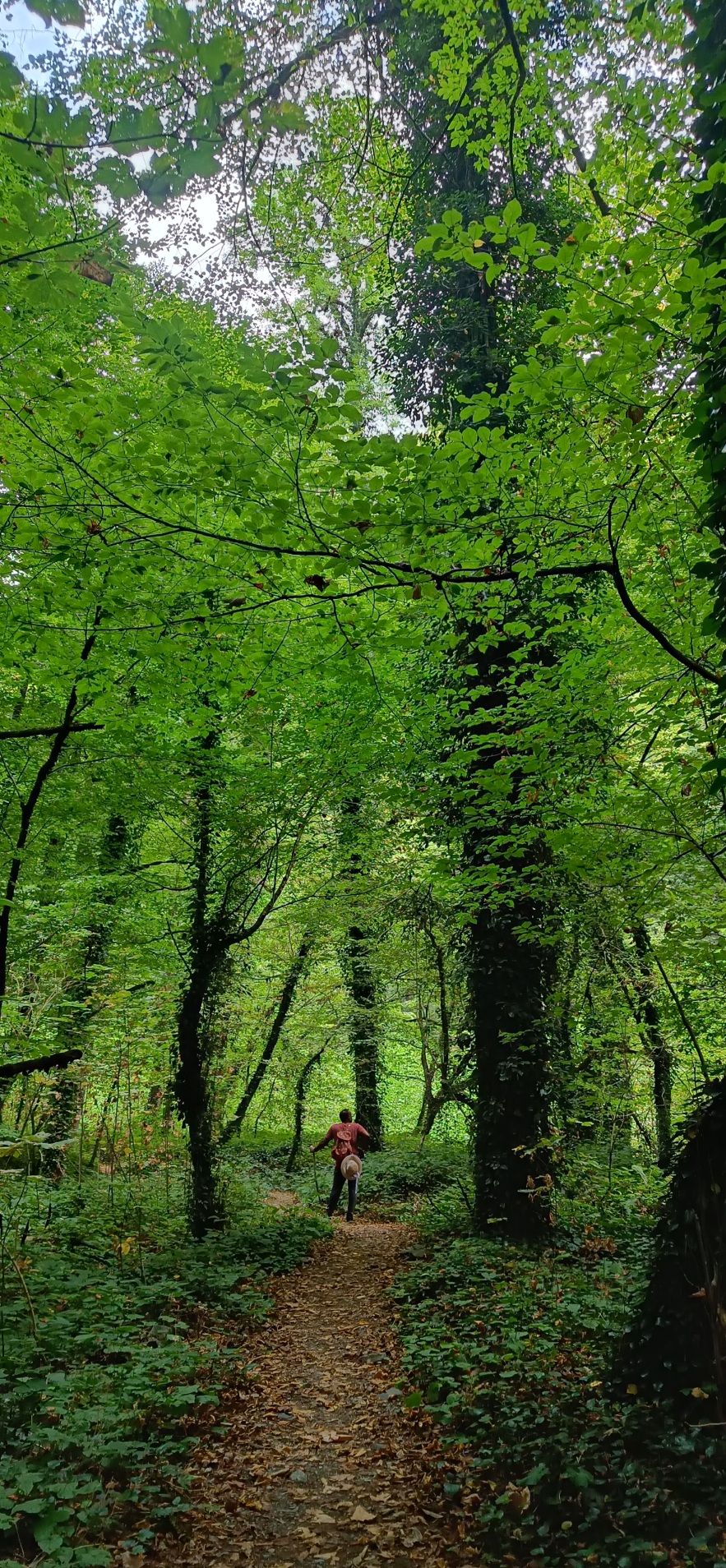
The Lagodekhi National Park trek is beautiful from the beginning, starting under a canopy so dense it feels less like a forest and more like a room.
We could see greenery everywhere, with a hint of brown for the tree trunk, and a little blue sky between the trees.
The trees blocked most of the sunlight, giving us the necessary respite from the heat as well.
As the guide had informed, there was a small river a few kilometers away, so the only consistent sound was the river running somewhere nearby.
It was more like a lighthouse, indicating we were on the right path, almost becoming a background frequency of the entire walk.
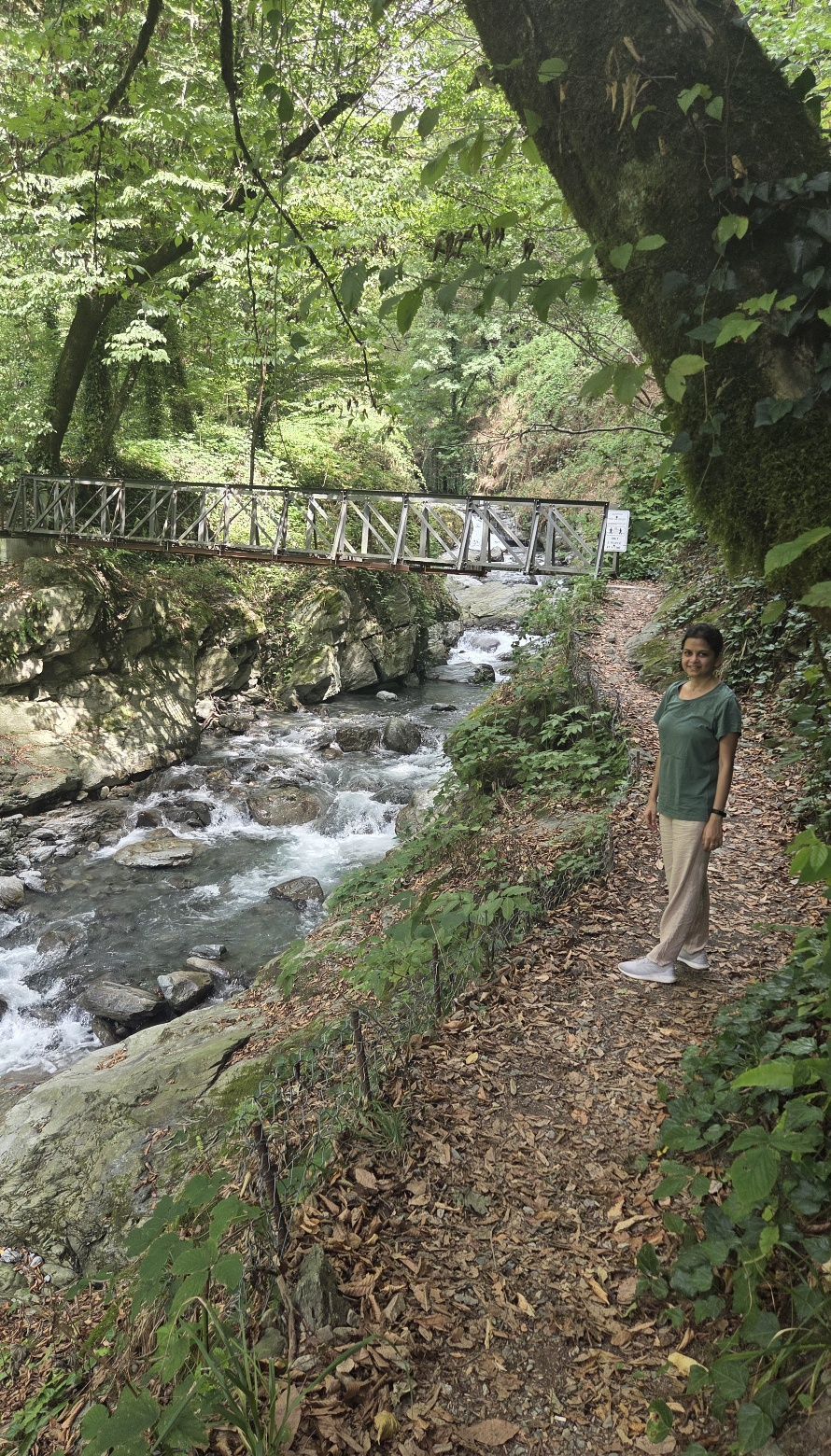
The initial path was rocky, with small stones buried deeply, pressing through the soles of our shoes with each step.
But soon, the rocks gave way to packed earth, then roots, then occasional wooden log stairs that the park had installed on steeper sections, along with iron rods and pipes hammered into the hillside for handholds.
I was loving the freedom, greenery, and the feeling of opting for a trail rather than enjoying at a beach or strolling aimlessly in the city. It felt like something unique to our Kakheti pit stop.
(You can read what other unique things we did in Kakheti in this complete Kakheti travel guide.)
I was excited, yet nervous, encouraging myself that yes, I can finish what I started.
Then came the waterfall, when the rippling sound became louder, and we could finally see the river.
It was full of stones, as rivers are, but the water was cool and comforting.
We spent some time there, resting our legs, had some water, and continued ahead.
What to Expect on the Trail: Terrain and Difficulty
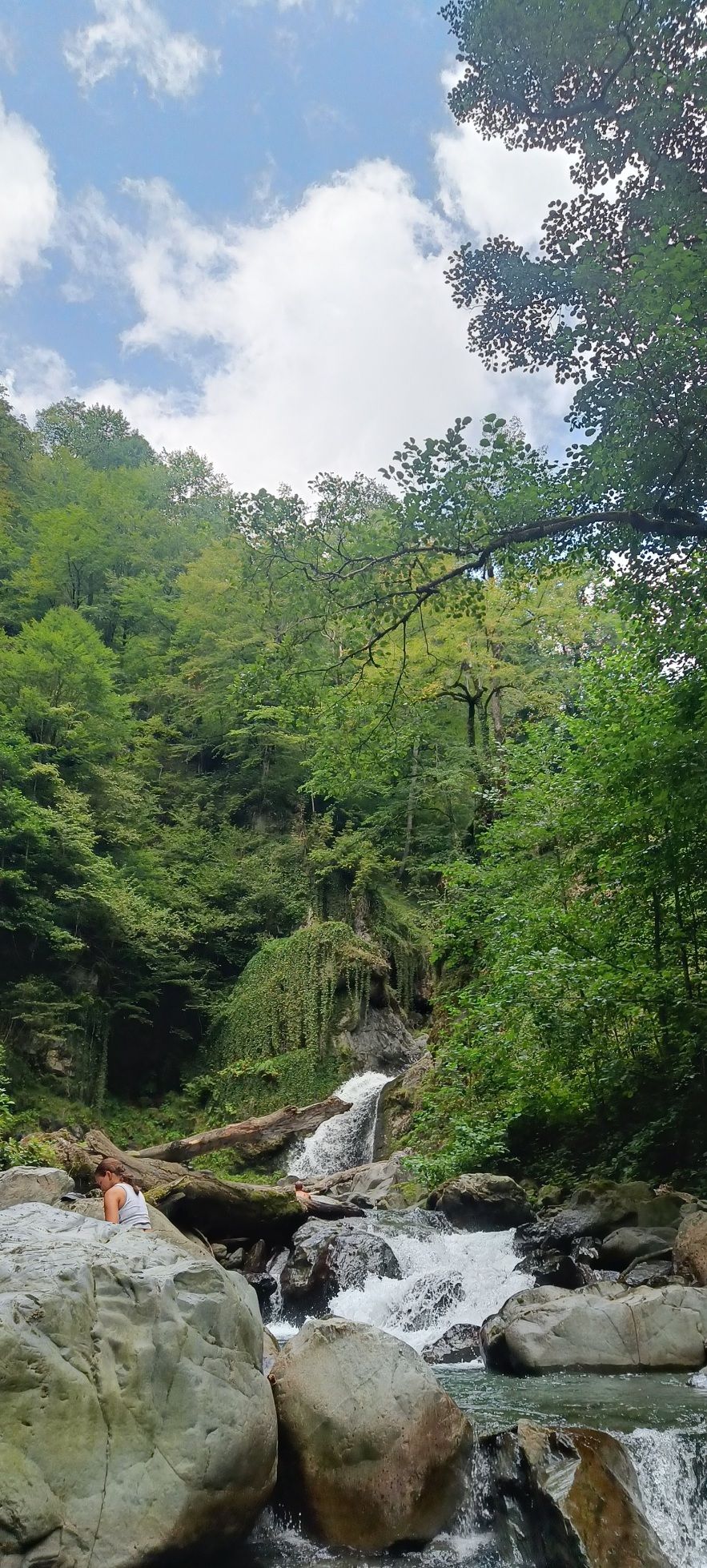
It took us some time to get into a quiet rhythm of walking along the trail before we could categorise the varying stretches of land.
Some stretches were genuinely pleasant, wide, flat paths through the forest where we could walk side by side and look around rather than down at our feet.
And then some sections were nothing like that. Steep climbs where the iron rods were the only reason to feel confident about the next step.
Narrow paths along the edge of a slope where the valley dropped away directly below, and there was perhaps a foot of width to walk on.
There was a small stretch in between, which was just 2 feet wide, with a valley directly beneath. There was no rod to hold, and it was scary.
The steps that came afterwards had rods, but were too steep to climb comfortably, and it was one of the challenging few minutes.
But after crossing it, I felt like a small win when we finally reached the iron bridge that marked almost the end of the hike.
The iron bridge was a solid connector, telling us that now we are climbing onto a different mountain.
The checkpoints like these were the real winners, for they always reassured us that we were still on the correct trail. We stopped briefly to confirm our direction and continue.
The Difficult End of the Trek: The 700 Metres Before the Waterfall
The ranger had specifically warned us about this last 700-meter section.
The trail in the last 700 metres before the waterfall is steep, narrow, and uneven, and that requires full attention.
This is not where you look at the scenery. This is where you look at your feet, then the next foothold, then your feet again.
There are steps to climb, which are nothing more than thick tree roots that have protruded from the soil. They were stable enough to set foot on, but still flimsy to climb without taking a support.
We picked a couple of thick fallen branches from the ground and started climbing slowly.
Honestly, it was scary, with a hurry to reach the waterfall after all. But I was more worried about the fact that I have to come back all the way to get out of the jungle.
Is the waterfall worth it?
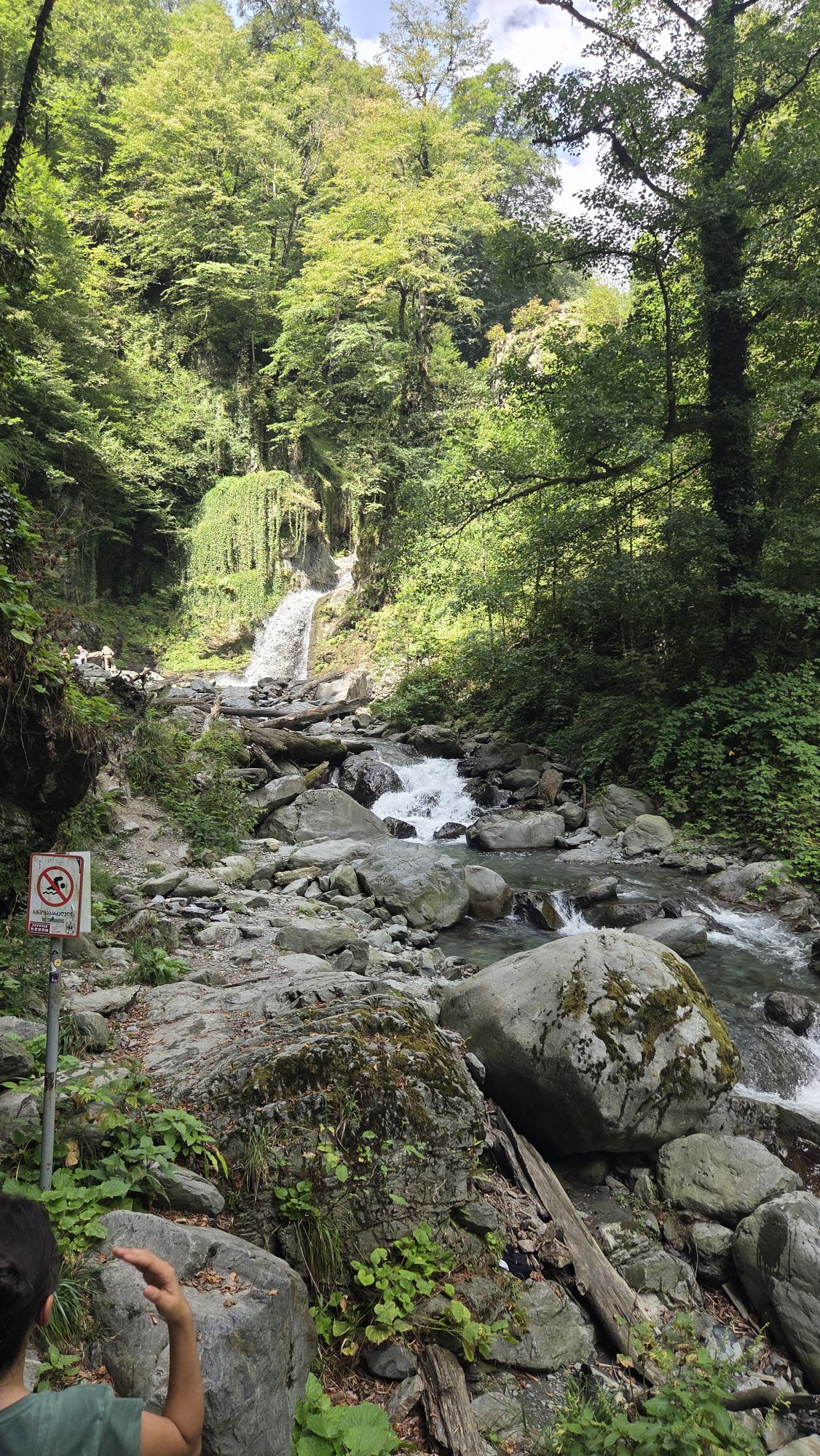
We finally reached the waterfall after approximately 2.5 hours of walking.
I want to be honest about this, because most trek articles are not: the waterfall was good. It was not extraordinary.
The pool at its base was cold, genuinely cold, the kind that numbs your feet within seconds (it did numb my feet when I tried dipping them in to ease the tiredness, but had to pull back immediately).
And the sound of the water was powerful, and the setting was beautiful in a straightforward forest waterfall kind of way.
But the journey to it was more arresting than the destination itself.
Having walked for 2.5 hours through that forest, along that river, up those slopes, I had been expecting something proportional to the effort.
What we found was a waterfall similar in character to smaller ones I have seen so many times around my hometown, small and yet beautiful, with only 1/8th of the effort.
This is not a reason not to go. It is simply the honest version of what is waiting at the end.
There was a couple already present at the waterfall when we arrived who apparently lived nearby and visited regularly.
The man, a sexagenarian, lean and entirely comfortable in the water, demonstrated this by diving in and swimming around the pool with the ease of someone in his own backyard.
He was diving in the chilling water before we had even sat down.
We rested for a while there, drying our sweat-soaked clothes and just enjoying the cold breeze and taking in the scenery, the prize of our hard work.
We had carried snacks, but didn’t feel like eating. We had one water bottle between us by this point.
We stayed for a while. Then we began the return.
What to carry for the Lagodekhi Trek?
The return journey on any serious trek is its own experience, and Lagodekhi’s is no different.
The ascents you climbed on the way there have become descents. Your legs are already tired. The sections that felt manageable in the morning feel different now. The steep rocky parts feel steeper.
We had a small backpack, filled with water and snacks. But carrying it on our backs made it more difficult to climb. So, while you need water, keep the backpack light and belongings to a minimum.
Look for lightweight backpacks that you can comfortably carry.
Because it was a forest, we also saw a couple of small, generally non-aggressive snakes, but avoided contact.
But it was crucial to keep an eye on the ground for them. There were also small lizards and skinks that darted out from under rocks as we passed, so fast they were more of a flash than a sighting.
The forest was quiet in a way that suggested it was full of things paying no attention to us whatsoever.
Coming Out the Other Side
We came out of the forest approximately five hours after we went in.
We had survived on one water bottle and no lunch.
But we were super exhausted. Even a single step seemed laborious. But we felt extremely happy and satisfied on finishing the Lagodekhi national park trek, already planning the next.
We went back to the hotel. We were done for the day.
Everything You Need to Know Before You Go To Lagodekhi National Park
Trail difficulty: The route to the waterfall is easy to moderate. It is not technical, with no ropes or climbing equipment required. But it has steep sections and some narrow exposed paths that will feel serious if you are not used to hiking.
Who should NOT do this trek
- knee issues
- fear of heights
- very low stamina
Duration: Allow 5–6 hours for the return journey to the waterfall. Add time if you plan to rest at the waterfall or stop at viewpoints along the way.
Sticks: You can pick one up from the path; other trekkers leave them at the end. They help significantly on the steep descents.
Snakes: Small, harmless, not looking for trouble. A stick is enough to move them off the path. They appear more often in the warmer months. Do not panic.
Starting time: Start as early as possible, ideally before 9 am. The trail is in forest cover, so it doesn’t get direct sun, but the heat builds through the afternoon, and the return journey feels longer when you are tired and hot.
Entry: Free for Rocho (Black Grouse) Waterfall. Register at the park office before starting. The rangers are genuinely helpful and will give you a map. If you plan to hike further, you might have to pay a small fee and get a permit for Black Rock Lake trek.
Getting there: Approximately one hour from Telavi by car.
A private driver or taxi from Telavi to the park and back is the most practical option.
Packing list for Lagodekhi National Park trek
Here is all you must carry while going on a trek to Lagodekhi National Park.
Water: Carry more than you think you need. We carried one bottle between the two of us, and it was not enough. The park has a tap at the entrance, but nothing on the trail. I recommend self-filtering water bottle. If you run out of tap water, a carbon filter helps improve the taste and safety of water you might find near the trail.
Food: Carry snacks even if you don’t think you’ll want them. Energy bars are better than anything heavy. We brought snacks and didn’t eat them, but we were glad they were there.
Footwear: This cannot be overstated. The rocky, rooty, often wet terrain requires shoes that grip. Do not do this trail in sandals or casual sneakers. Trekking shoes with grip are essential. Sandals or trainers with smooth soles will make the steep sections genuinely dangerous.
I wore sneakers and paid for it with blisters!
If you’re planning a hike like this, these are a budget-friendly pair of hiking boots that I wish I had.
But if you can afford and often hike, a trekker friend of mine highly recommended Hiking & Trekking Boots.
Clothing: It can get humid while you walk along the thick canopy. Make sure to wear light, breathable outfits. Do not wear denims or tight clothese at any cost.
Power Bank: If you are like me who likes to click a lot of pictures, it would be best to carry a lightweight power bank to ensure you do not run out of batter in the middle of the trek.
Torch: While you won’t need a external light source if you start early, it is best to carry a small torch for emergencies.
If you are travelling internationally for the first time, these travel essentials might come in handy.
Should You Do the Lagodekhi Trek?
If you are physically reasonably comfortable and have a full day in Kakheti that you haven’t filled, yes.
But it is important you go for the trail and not for the waterfall; it is beautiful, but not extraordinary.
Instead, the forest is genuinely, quietly extraordinary in the way that places are when they have not been optimised for tourism.
The sound of the river throughout, the green canopy overhead, and the gorgeous view of sunrays filtering through the shades occasionally are all worth it.
These are not things that appear on a highlights reel. They are the actual substance of the day.
If you are planning a trip to Kakheti, read the complete Kakheti guide, including Winery Khareba, Alaverdi Monastery, and Sighnaghi.
See how Lagodekhi fits into our 10-day Georgia itinerary and how many days we spent in Tbilisi.
Plan Your Lagodekhi Day Trip
- Stay in Telavi
- Start early
- Carry enough water
- Combine with Kakheti wineries
Questions You Might Have
Is the Lagodekhi waterfall worth the trek?
Honestly, the waterfall itself is good but not spectacular. The trek through the forest to reach it is the real experience. Go for the journey, not just the destination.
What should I wear for the Lagodekhi trek?
Trekking shoes with grip, light breathable clothing, and a hat. Avoid jeans, they are heavy and uncomfortable when you are moving for five hours in the heat. Carry a light layer for the forest, which can feel cool even when the outside is warm.
Is the Lagodekhi trek difficult?
There are several treks in Lagodekhi. The shortest to Rocho (Black Grouse) Waterfall is easy to moderate. The remaining ones are moderate to challenging.
The path is long (around 5 hours total) and has steep sections with narrow exposed edges. It is doable without special training but requires decent fitness and proper footwear.
Can I do Lagodekhi as a day trip from Tbilisi?
Technically, yes, you can do a day trip from Tbilisi, but it would be a very long day. It is much more sensibly done from Telavi as a day trip, with Kakheti as your base.
Do you need a guide for Lagodekhi National Park?
No, the trail is marked, and the rangers at the office give you a map and a briefing. A guide is optional but not necessary for the main waterfall trail.
Can I combine Lagodekhi with a Kakheti wine tour?
Yes! You can combine both, as Lagodekhi is located within Kakheti. You can opt for wine tasting in Kvareli or Sighnaghi. However, you might just want to go back to the hotel and rest after a 5-hour hike.
Is Lagodekhi close to Sighnaghi or Telavi?
Sighnaghi is about 46 km from Lagodekhi; roughly an hour’s drive. Telavi is further but still reachable. Both are easy half-day detours.
Are there picnic areas in the park?
Yes. Picnic and camping sites are specially arranged along the trails, including near the Meteo shelter. Bring your own food and enjoy the forest setting.
What should I pack for hiking in Lagodekhi?
Pack sturdy hiking boots, weather-appropriate clothing in layers, a basic first aid kit, sufficient food and water, and maps or GPS, as cell reception is limited.
How much water should I carry?
Carry at least 2–3 litres of water per person, especially in summer. Temperatures can get intense, and trails are steep, so hydration is critical.
What is the Black Grouse and where can I see it?
The black grouse is one of 150 bird species found in Lagodekhi. It’s an elusive forest bird best spotted along the Grouse Waterfall trail in early morning.
What is the Rocho / Grouse Waterfall trail?
Black Grouse Falls is a stunning 30-meter cascade surrounded by dense forests, accessible via scenic trails, and ideal for wildlife spotting and photography. A manageable day hike.
Are the trails well-marked?
Trails are marked, and tourist infrastructure is well-arranged. That said, multi-day routes can be steep and rugged — a guide is recommended for longer hikes.
Do I need to register for the Lagodekhi National Park trek? Do I need a permit? How much does entry cost?
Yes, registration is required for safety and visitor tracking. For the Black Rock Lake trail, bring your passport to register with Border Patrol. A small entry fee applies; fees vary for locals and foreign visitors. Confirm the current tariff at the Lagodekhi Information Centre.
Discover more from The Hopping Tales Journal
Subscribe to get the latest posts sent to your email.
Leave a Reply