
Of the few days we had kept in our Tbilisi itinerary, we set aside the last day for nearby day trips, including Mtskheta, Georgia’s ancient capital.
Honestly, Mtskheta was not a prominent part of my travel memories after I returned (Georgia is very gorgeous; it is difficult to keep count), but looking at the pictures, the visit came back to me, and I was transported back to the hot afternoon, the narrow lanes, the old stone cathedral, and the tranquility.
Needless to say, Mtskheta is one of those places that, in hindsight, feels far more significant than it did in the moment.
Before you continue, check out my complete Georgia Travel Guide for accommodation, transport, budget tips, more.
What to Expect from Mtskheta
Mtskheta is a small town, barely 20 kilometres from Tbilisi, and is generally done as a day trip.
Locally, it is called the Holy City; it has been a UNESCO World Heritage Site since 1994.
Mtskheta was the capital of Georgia until the 6th century. It was where Christianity officially came to this country in 326 AD.

An ancient historic city, Mtskheta looks and feels very different from Tbilisi or Kakheti.
Although most tourists go to Mtskheta to visit the three prominent religious places, you can also spend some hours walking the cobblestone streets, exploring the grandeur of monasteries, and tasting wine.
Visiting Mtskheta is like travelling to Ujjain or Varanasi in India, where the temples are the main character, but the city has many other things to offer if you wish to spend some time.
Georgia has a lot of history, but in Mtskheta, it feels particularly dense.
Jvari Monastery — A Place Stuck in Time with Amazing Panoramic View.

If you ask me, Jvari Monastery is nothing like the other churches we visited in Georgia. It is on a hilltop and has not been very well maintained.
The wind and acid rain over centuries have eroded its exterior until it looks almost rough-hewn, without any original carvings which might have been the highlight centuries ago.
So, the moment we reached there in the scorching afternoon, my first thought was: why is this place a part of our Georgia itinerary?
We had already seen several beautiful, ornate churches across Georgia, such as the Holy Trinity Cathedral in Tbilisi, so, by comparison, Jvari looked plain and weatherbeaten.
But reading its history changed my outlook; I was standing before the oldest surviving, most famous church and a sacred pilgrimage place of the country.
Jvari was built in the early 6th century on a site where, according to legend, St. Nino — the female Christian preacher who brought Christianity to Georgia — had erected a large wooden cross in the 4th century. The name Jvari literally means cross in Georgian. This monastery has been on this small hill for over fifteen centuries!.

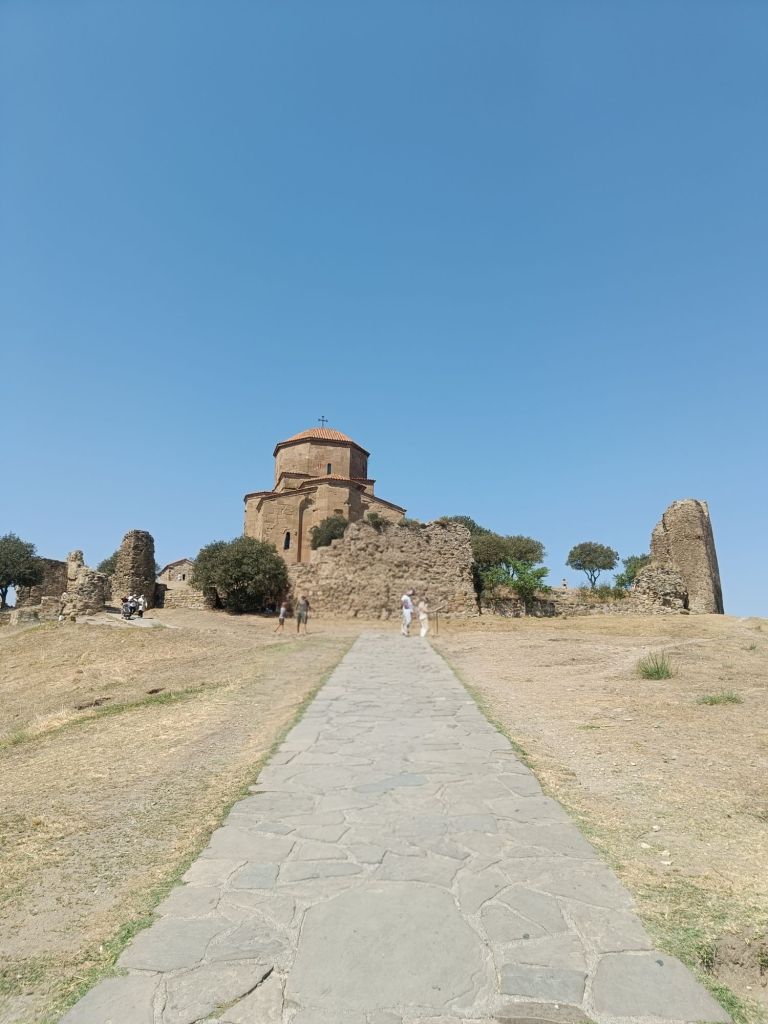
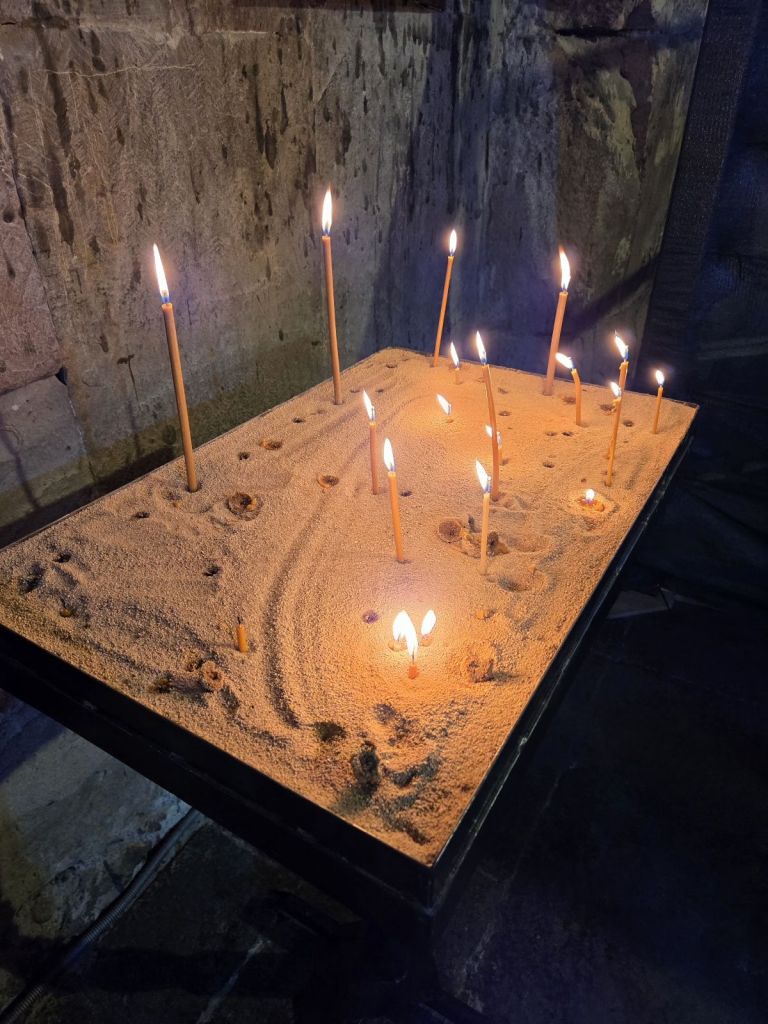

While it holds significant religious significance for the locals, it has spectacular panoramic views all around.
While the front of the church offers a view of the road and surrounding hills, the view from the back is quite memorable.
There’s a small balcony-like opening at the rear of the monastery, and from it, you can see the entire town of Mtskheta laid out below, with the Mtkvari and Aragvi rivers meeting in a wide, gleaming V.
It is genuinely breathtaking. Even though we visited in the afternoon, when it was extremely hot and uncomfortable, it looked splendid.
I felt like I was looking at a huge painting from afar.
How to reach Jvari Monastery?
From Mtskheta town
Jvari is about 12 km from the centre of Mtskheta town and typically not walkable.
The best way to reach Jvari is to take a local taxi from town.
The round trip should cost around 10–15 GEL. It would be best to ask your driver to wait for you while you visit the monastery.
Arrange for the driver to wait
Some things to note while visiting Jvari Monastery
- Entry is free; anyone can go.
- You cannot enter bare-legged and bare-shouldered, as it’s the rule for all the religious places in Georgia.
- Women need to cover their heads too.
- Scarves are usually available at the entrance, but carry one just in case.
- While you can go anytime, the panoramic views look best when the sun is not unforgiving. Avoid going in the peak afternoon.
From Tbilisi town (see below)
Svetitskhoveli Cathedral — The Spiritual Heart of Georgia
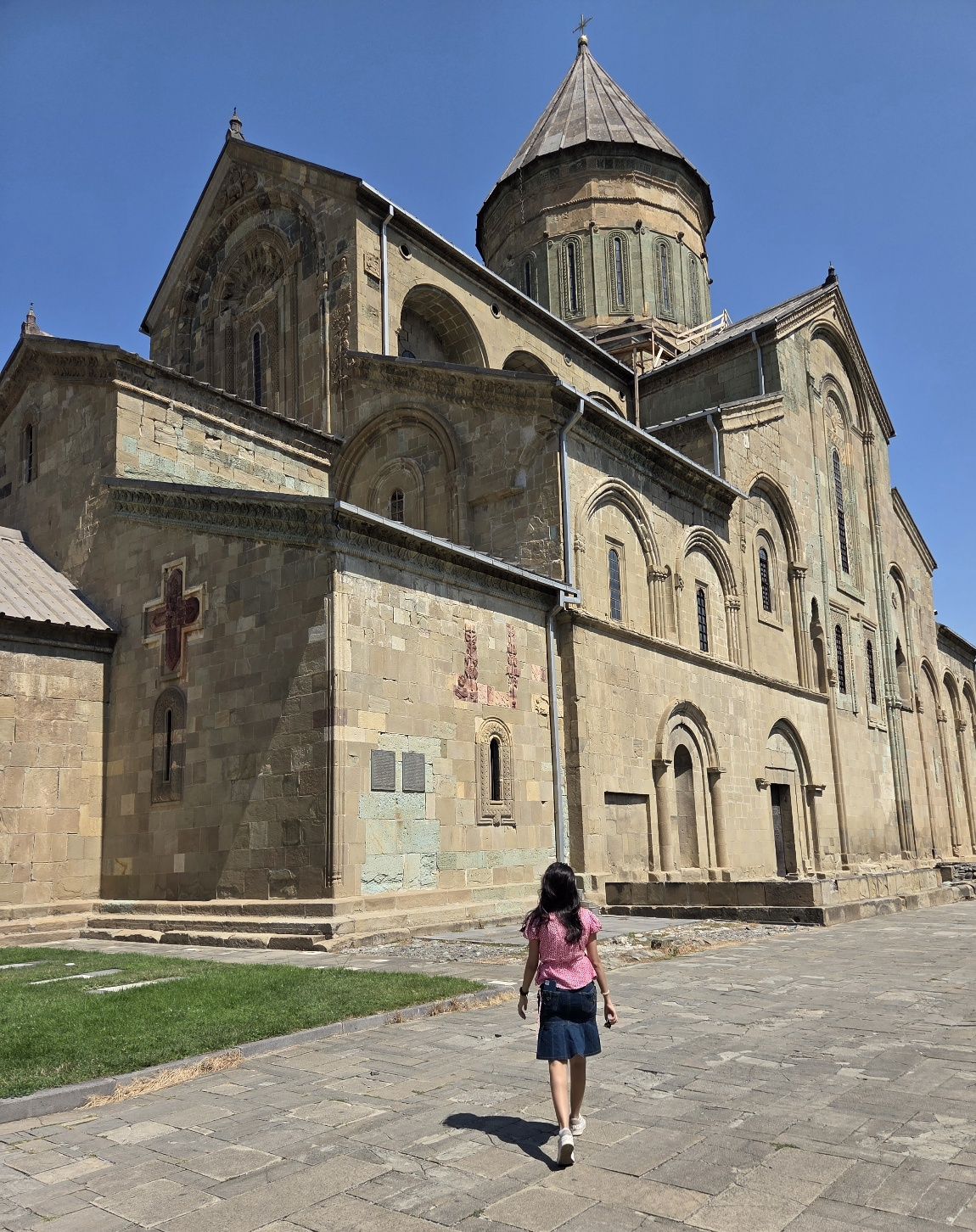
If the first impression of Jvari was disappointing, Svetitskhoveli was quite pleasant.
Walking to it from the road, I was immediately reminded of the famous temples back home in India. The same narrow lane leading up to it, lined with small shops on both sides selling candles, souvenirs, and local handicrafts.
The same sense of something sacred at the end of a corridor.
The only difference being, here people were walking with candles in hand instead of puja thalis, and the chatter was in Georgian, not Hindi.
Once you reach the main gate of the cathedral complex, it’s a different atmosphere completely.
There is a wide, spacious courtyard in between, which stands the mighty Svetitskhoveli Cathedral, again reminding me of the stone temples of India.
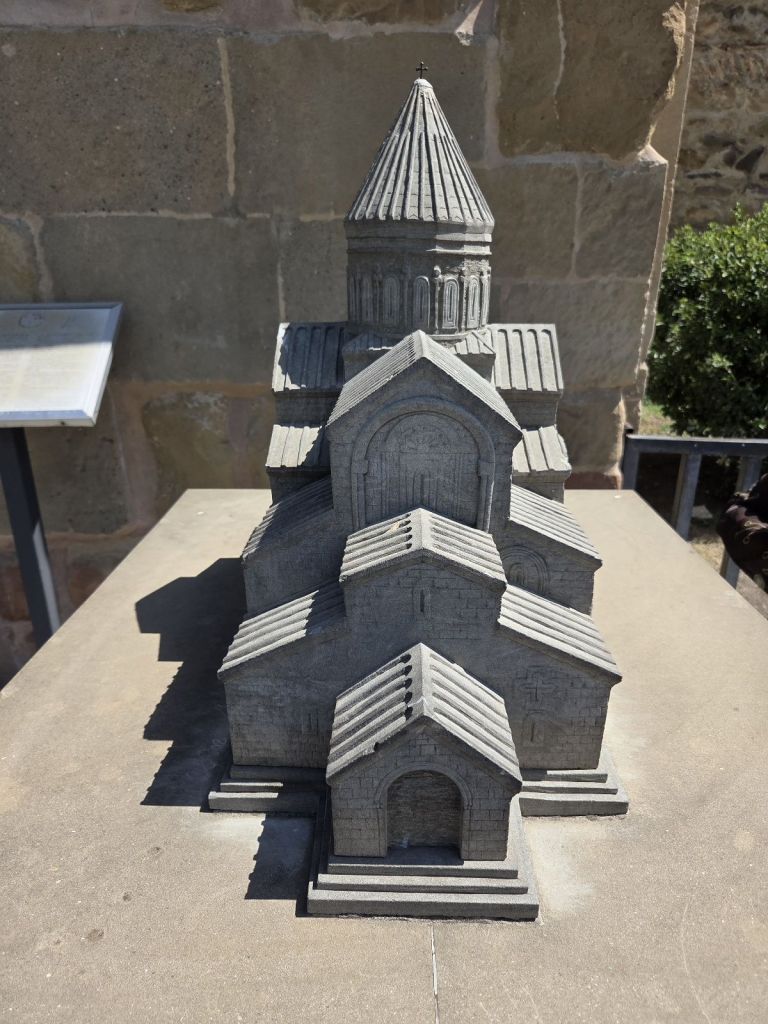


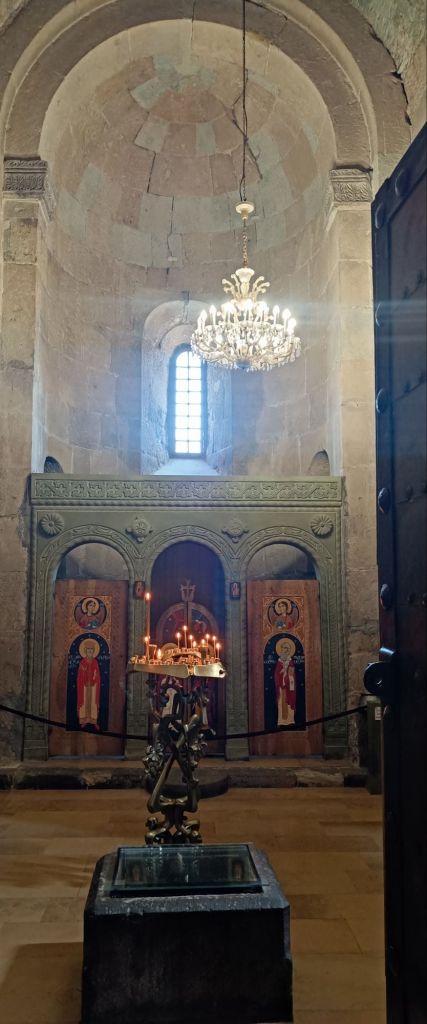
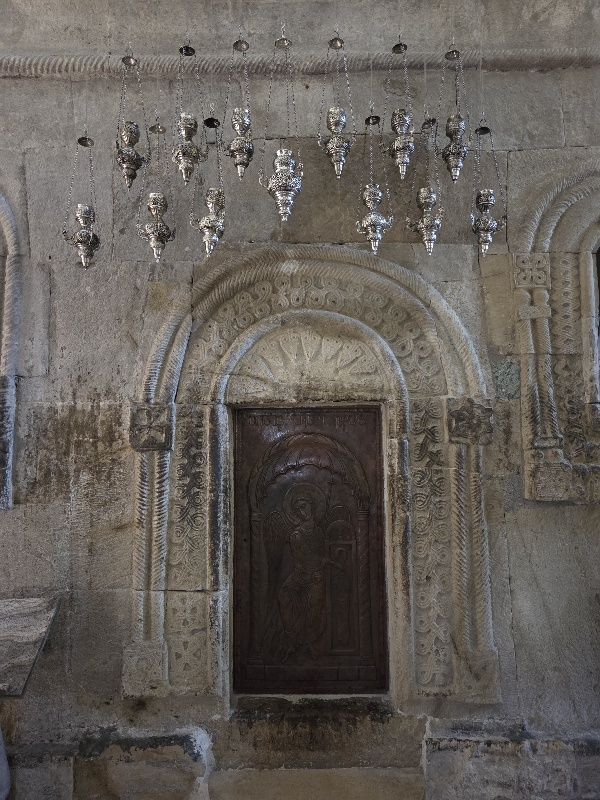

According to legend, a piece of Christ’s robe is buried beneath this cathedral — which is why it’s considered the spiritual heart of Georgia.
The name translates to LifeGiving Pillar, and the cathedral has been on this site in some form since the 4th century.
The current structure was built between 1010 and 1029 by the Georgian architect Arsukisdze.
And as you walk through it, you’re also walking over the burial sites of some of Georgia’s greatest kings.
Pope Francis visited Svetitskhoveli Cathedral in 2016 as well.
Why do I remember this cathedral vividly?
We saw two distinct things in this cathedral which I hadn’t seen earlier in Georgia:
- A pair of Georgian priests near the entrance. Unlike anything I was used to seeing, they were dressed entirely in black robes with long, flowing white beards. And boy, they looked intimidating.
- A small vending machine near the entrance dispensing souvenir coins. You could put in a Georgian Lari and get a Georgian souvenir coin in return.

Honestly, it was not as visually dramatic as the Holy Trinity Cathedral in Tbilisi.
But it was extremely calming, with the incense, the candlelight, and the sheer age of the place.
Some things to note while visiting Svetitskhoveli Cathedral:
- Entry is free
- Women must cover their legs and heads before entering; scarves and skirts are available at the entrance to borrow.
- The cathedral is in the heart of Mtskheta town, easily walkable from where the marshrutka drops you.
Samtavro Convent
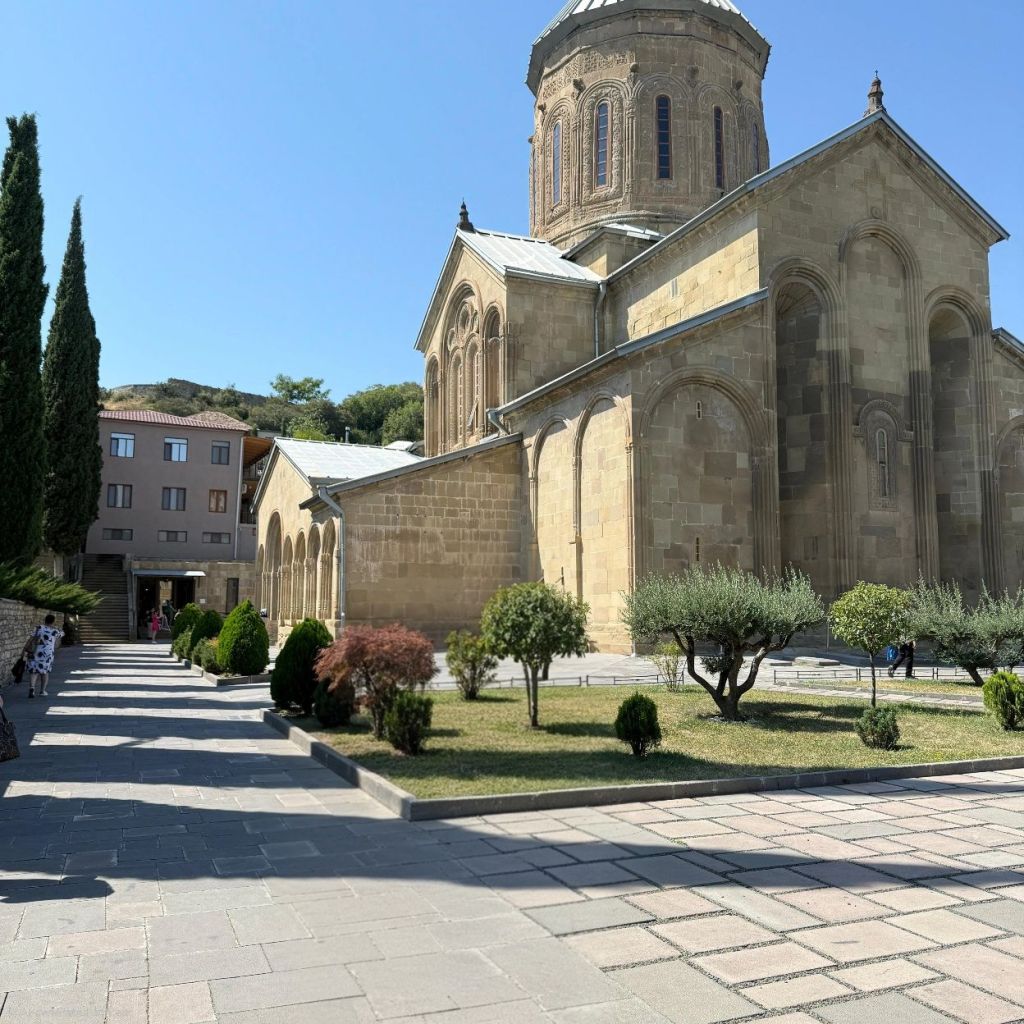
If you have any energy left after Jvari and Svetitskhoveli, Samtavro Convent is a short walk away in Mtskheta town.
It’s a big 11th-century church with a smaller one next to it.
The smaller one can be easily missed unless it has a huge historical reference.
Legend says King Mirian built it beside a blackberry bush that once grew on the spot, and felt too unworthy to build inside Svetitskhoveli himself, so he built this modest one instead.
Also, he and Queen Nana, Georgia’s first Christian royals, are buried right there.
The grander Samtavro church was built later beside it.
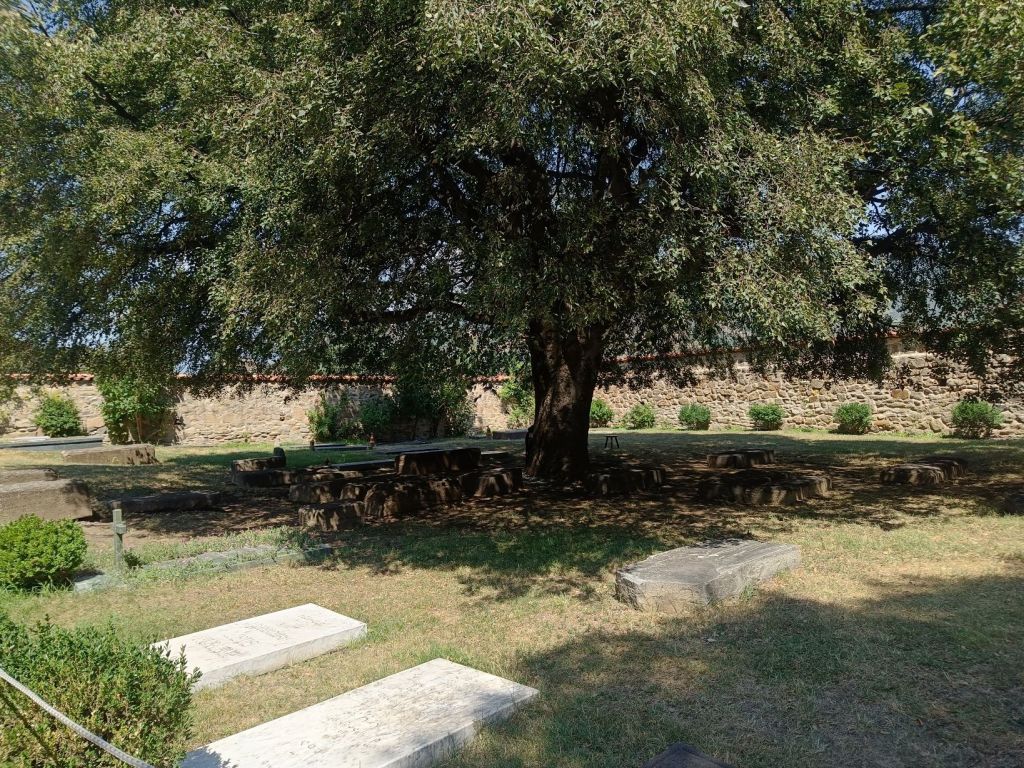
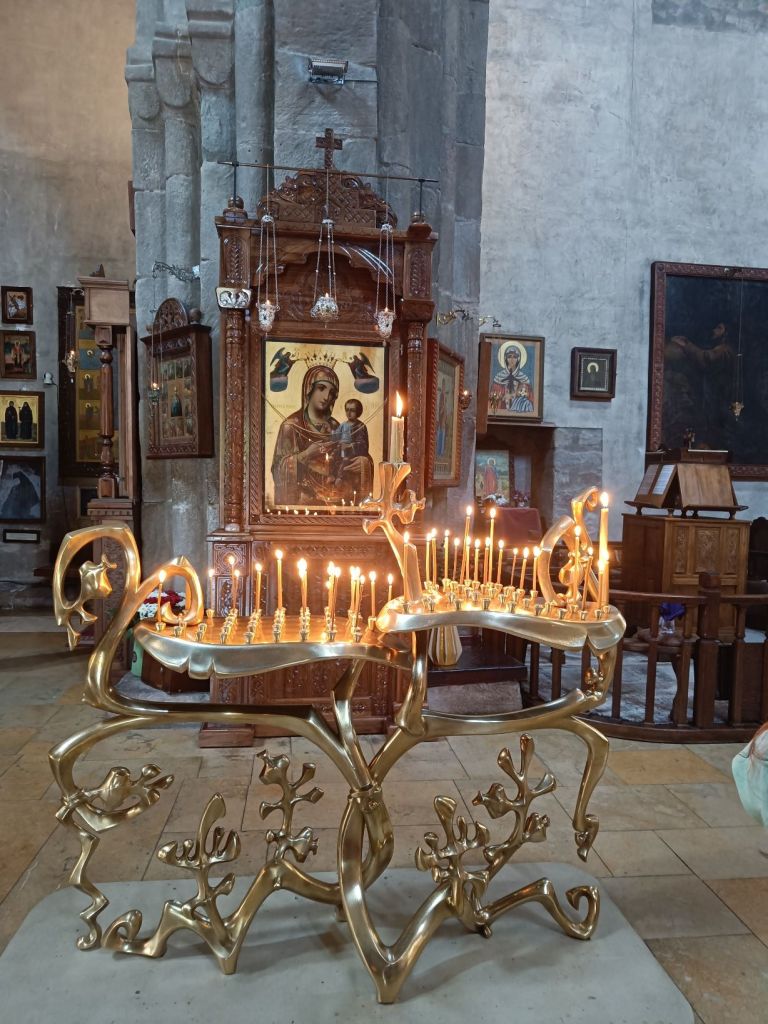
It’s not a place that overwhelms you the way Jvari’s view does, but it rounds out the story of Mtskheta’s oldest churches, and it’s a five-minute stop if you’re already in town.
Where to eat in Mtskheta
While there is nothing around Javri Monastery, you can find a lot of cafes outside Svetitskhoveli Cathedral.
There’s a winery right across from the entrance, which offers meals too.
You can do wine tasting there and buy a bottle as well.
We had our lunch of Khinkhali and cha cha at a busy cafe just outside the main gate of Svetitskhoveli Cathedral, and loved the shelter of cool air and good food.
How to Get to Mtskheta from Tbilisi
This is one of the easiest day trips you can do in Georgia, with or without a tour.
By Marshrutka (most budget-friendly)
- Take the Tbilisi metro to Didube station (1 GEL flat fare).
- From there, head out to the bus station area; ask anyone for the Mtskheta marshrutka, and they’ll point you right.
- Look for a 16–20 seater Mercedes Sprinter with Mtskheta marked on it.
- Buy a ticket at the counter (around 1–2 GEL), and you’re on a 30minute ride to the town.
- Marshrutkas run every 30 minutes or so from 7 am.
- To return, just head back to the main road and flag down any marshrutka heading toward Tbilisi — they run frequently throughout the day.
- Pay the driver in cash.
By Bolt or Taxi
If you’d rather not deal with the marshrutka scramble, a Bolt cab from central Tbilisi to Mtskheta costs around 20 GEL one way.
It’s faster and far simpler, especially if you’re travelling with family.
By Private Driver
A private driver is the most flexible option to combine other stops like Gori or the Chronicles of Georgia in the same trip. (We did the same).
GoTrip has multiple options, and drivers let you fix the price in advance and plan your own stops.
By Guided Tour
If you are genuinely interested in the history of the ancient city of Mtskheta, opting for a guided tour will be the best option.
Organised tours from Tbilisi that cover Mtskheta, Jvari, and often Gori and Uplistsikhe as a full day cost around $20 per person.
Such organised tours also help you mingle with fellow travellers and maybe exchange notes on their itinerary.
Best Time to Visit Mtskheta
We visited in August, on a very hot day, and I would strongly recommend going earlier in the morning or later in the afternoon. The midday sun on those stone courtyards is unforgiving, and the crowds peak in the afternoon.
The best months overall are April–June and September–October. The temperatures are pleasant, there are fewer crowds, and the landscapes around the town are at their lushest.
Mtskheta is also stunning in winter, though some smaller sites may have reduced access.
I have shared the best time to visit Georgia in the travel guide.
Where to stay in Mtskheta
If you are staying in Tbilisi, you can easily return in half a day.
But in case you need to stay in Mtskheta, here are my recommendations for budget hotels with great reviews on Agoda.com.
We stayed at the Ibis Stadium Tbilisi and returned in a few hours.


How Much Time Do You Need for Mtskheta?
Typically, you can easily visit all three spots in three to four hours.
But if you wish to explore the city beyond these tourist places, you can walk the town, grab a coffee or some Georgian bread from one of the lanes, and head back.
If you’re combining it with a winery visit or lingering over lunch, add another hour.
Mtskheta can be covered in a half-day trip, and you will be back in Tbilisi by late afternoon.
Things to Keep in Mind Before You Go to Mtskheta
- Dress modestly. Both monasteries require covered shoulders and heads for women, and covered knees for everyone. Carry a scarf — don’t rely entirely on borrowed ones at the entrance.
- Carry some cash. Georgia is increasingly card-friendly, but marshrutkas and smaller vendors in Mtskheta are still cash-only.
- Hire a taxi for Jvari. The monastery is 12 km from town — too far to walk, and the road is steep. Sort out a local taxi in Mtskheta town itself; it should cost 10–15 GEL for a round trip with wait time.
- Don’t skip the souvenir market near Svetitskhoveli if you’re looking for Georgian handicrafts, churchkhela, or wine. Prices here are reportedly better than in Tbilisi, though a little bargaining doesn’t hurt.
- Combine it smartly. Mtskheta pairs very naturally with the Chronicles of Georgia monument back in Tbilisi — you can stop there on the way back and make a full day of history and culture without driving very far at all.( Read about it in Day trips from Tbilisi)
- Check before you photograph inside churches and monasteries: some places do not allow cameras and this is explicitly stated. Respect the rules.
After committing a few mistakes, I have rounded up some tips to travel to Georgia for a wholesome trip.
Is Mtskheta Worth Visiting?
Yes. It is
It might not be a fun destination or a very picturesque place.
But there’s something about standing in a space where people have been coming to pray for over fifteen hundred years. You might not remember the place, but you would remember the feel.
Who Might Not Enjoy Mtskheta?
Although I strongly suggest you visit Mtskheta, skip it if:
- You are travelling with young kids, who might not enjoy the churches.
- You do not enjoy historical or religious places
- You have had enough monasteries and churches in Tbilisi and other cities.
- You have mobility issues and can have trouble climbing stairs or walking cobblestone paths.
- You dislike religious codes and will not like to adhere to the rules.
Planning a Georgia trip? I’ve written a full 10-day Georgia itinerary for Indian travellers and a guide to the best day trips from Tbilisi that you might find useful.
Know all about the Georgia visa process and the cost of a mid-budget Georgia trip in detail.
Questions You Had About Mtskheta
Was Mtskheta the ancient capital of Georgia?
Yes. Mtskheta was the capital of the Kingdom of Iberia (Kartli) from around the 3rd century BC until the capital shifted to Tbilisi by the 6th century AD.
How do I go from Tbilisi to Mtskheta?
Easiest by marshrutka from Didube station (1–2 GEL, ~30 min), or a Bolt/taxi for around 20 GEL one way. Private drivers and guided tours are also available if you want to combine it with other stops.
Is Mtskheta worth visiting from Tbilisi?
Yes — it’s an easy half-day trip and the historical density (Georgia’s old capital, its first churches) makes it worth the detour, even if it doesn’t have the visual drama of Kazbegi or Kakheti.
How old is Mtskheta?
The city was founded around the 5th century BCE, making it roughly 2,500 years old — though archaeological finds in the area go back even further, to the Bronze Age.
What is Mtskheta famous for?
It’s Georgia’s religious capital and the site of Svetitskhoveli Cathedral, Jvari Monastery, and where Christianity became Georgia’s state religion in 326 AD.
Do I need a guide for Mtskheta?
The sites are easy to navigate independently but have a historical significance. If you are interested in the deeper history of the sites, you can book a guided tour.
Can you visit Mtskheta in one day?
Yes. 3 to 4 hours covers Jvari and Svetitskhoveli comfortably, with time to spare for lunch or a Samtavro stop.
How far is Mtskheta from Tbilisi?
Mtskheta is about 20 km away from Tbilisi, roughly a 30-minute drive or marshrutka ride.
Some links in this post are affiliate links. If you book through them, I may earn a small commission at no extra cost to you. I only recommend things I genuinely used or would use.
Discover more from The Hopping Tales Journal
Subscribe to get the latest posts sent to your email.
Leave a Reply